


What's Happening?
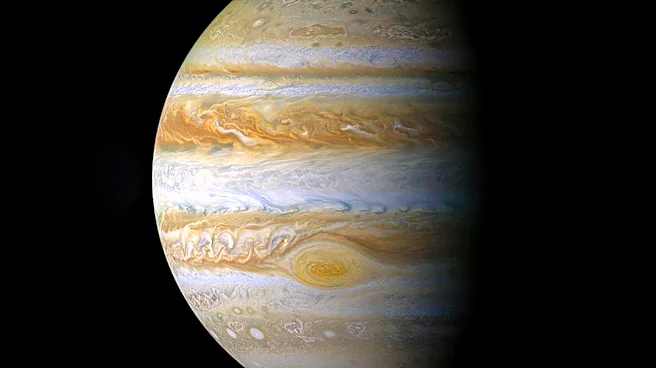
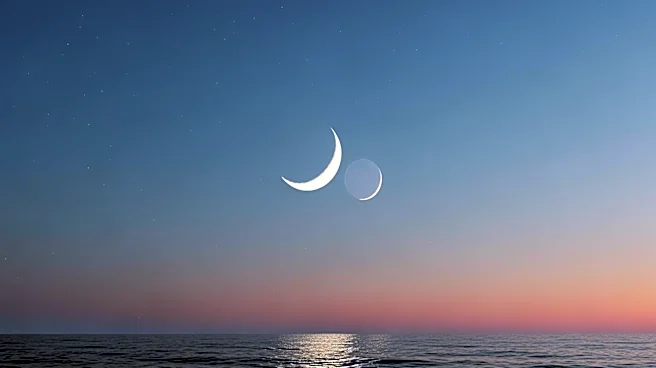
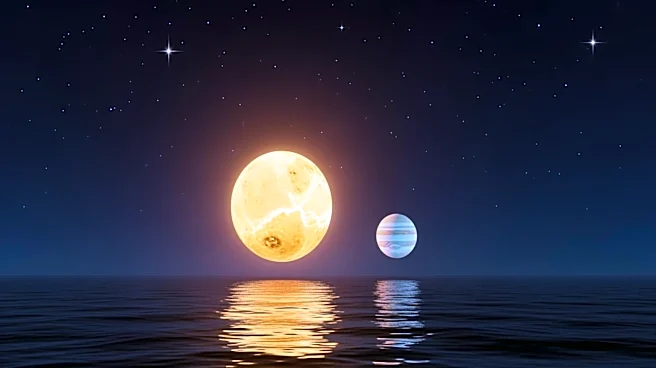
In July 2026, the Southern Hemisphere sky will feature a celestial display with Venus and Jupiter prominently visible. Venus will shine brightly in the early evening, easily visible 30 minutes after sunset, and will gradually move into a darker sky as the month
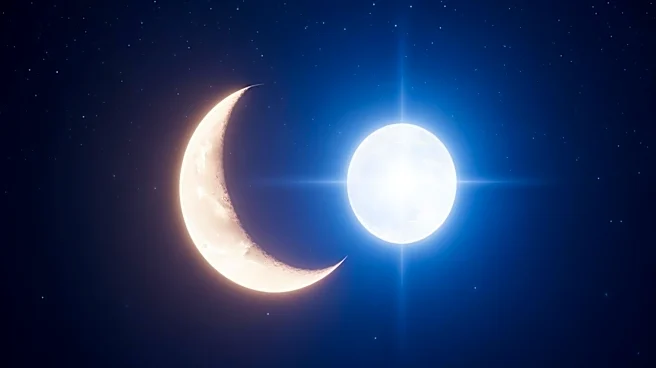
progresses. Jupiter, located to the lower left of Venus, will also be visible but will succumb to the Sun's glare by mid-July, reaching solar conjunction on July 29. It is expected to reappear before dawn in late August. Mercury will also be present, though it will be challenging to spot with the naked eye due to its proximity to the Sun. The celestial event offers a unique opportunity for stargazers to observe these planets, with Venus becoming more attractive through a telescope as it transitions from a 69 percent lit disk to a 56 percent illuminated gibbous phase by the end of the month.
Why It's Important?
This astronomical event is significant for both amateur and professional astronomers, providing a rare opportunity to observe Venus and Jupiter in close proximity. The visibility of these planets offers educational and observational opportunities, enhancing public interest in astronomy. The event also highlights the dynamic nature of our solar system and the predictable movements of celestial bodies. For those in the Southern Hemisphere, this event serves as a reminder of the vastness and beauty of the universe, potentially inspiring future generations to pursue studies in astronomy and related sciences.