



What's Happening?
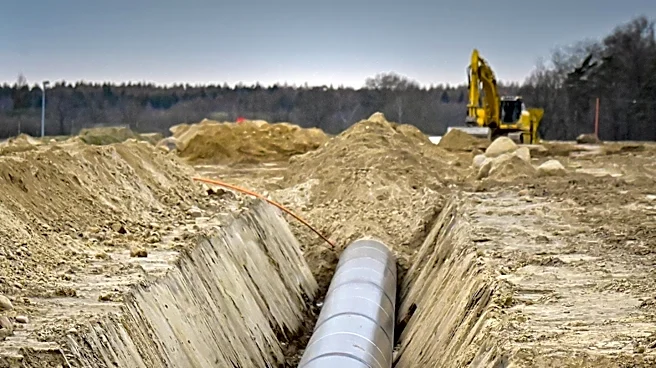
Libya and Egypt are on the verge of finalizing a $1 billion oil pipeline project that will span 800 kilometers from Tobruk in Libya to Alexandria in Egypt. This pipeline is designed to facilitate the transport of Libyan oil to Egyptian refineries located
on the Mediterranean coast. The project is part of a broader effort to enhance energy cooperation between the two nations, especially in light of recent disruptions in traditional energy routes such as the Strait of Hormuz. The pipeline is expected to bolster Libya's oil export capacity and support Egypt's energy market, which has been under strain. The project discussions include financing options, execution details, and determining the pipeline's capacity in line with Libya's export capabilities and Egyptian refinery capacities.
Why It's Important?
The completion of this pipeline is significant for both Libya and Egypt as it represents a strategic alignment in energy cooperation. For Libya, which holds Africa's largest proven oil reserves, the pipeline offers a stable export route that could enhance its oil production and export capabilities. For Egypt, the pipeline provides an alternative energy supply route, reducing its dependency on the Strait of Hormuz, which has been a point of geopolitical tension. This project could also stimulate economic growth in both countries by creating jobs and increasing energy security. Additionally, it reflects a growing trend of regional cooperation in North Africa, which could lead to more integrated energy markets and infrastructure development.
What's Next?
As the project nears completion, both countries will need to finalize the financing and execution plans. The pipeline's construction will likely involve significant logistical and engineering challenges, requiring collaboration between government agencies and private sector partners. Once operational, the pipeline could lead to increased oil production in Libya and enhanced refining capacity in Egypt. The project may also prompt other North African countries to explore similar cooperative energy projects, potentially leading to a more interconnected regional energy network.