
What's Happening?
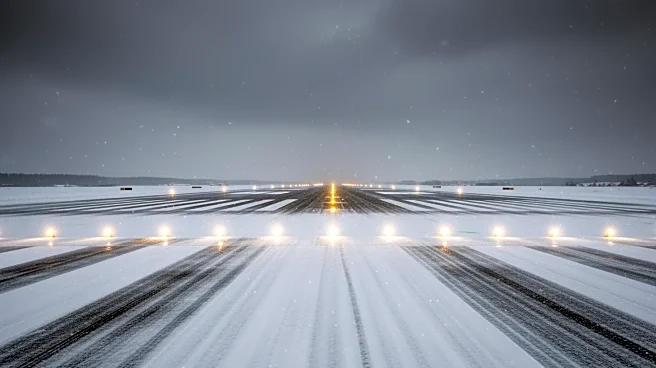
A severe winter storm system is affecting air travel across the United States, particularly from the upper Midwest to the Northeast, during the busy holiday season. The storm has already caused significant
disruptions, with over 3,600 flights canceled and 30,000 flights delayed between December 26 and December 28. As of Monday morning, more than 500 flights were canceled, and over 2,000 were delayed. Delta Air Lines has been the most affected airline globally, according to FlightAware data. The National Weather Service has warned of a potent storm reaching peak intensity, impacting regions from the Midwest to the Great Lakes and causing freezing rain in New England.
Why It's Important?
The storm's impact on air travel during the holiday season highlights the challenges faced by airlines in managing operations under severe weather conditions. The disruptions affect millions of travelers, potentially leading to economic losses for airlines and related industries. The situation underscores the importance of robust contingency planning and communication strategies for airlines to minimize passenger inconvenience and maintain safety. The storm also raises concerns about the resilience of transportation infrastructure in the face of increasingly frequent and severe weather events.
What's Next?
Airlines are likely to continue facing operational challenges as they work to manage the backlog of delayed and canceled flights. Travelers may experience extended wait times and potential changes to their travel plans. The ongoing weather conditions could lead to further disruptions, prompting airlines to adjust schedules and deploy additional resources to manage the situation. The incident may lead to discussions about improving weather forecasting and response strategies to better prepare for similar events in the future.