




What's Happening?
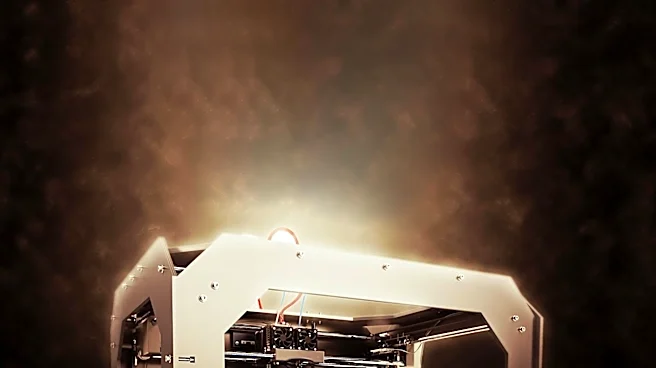
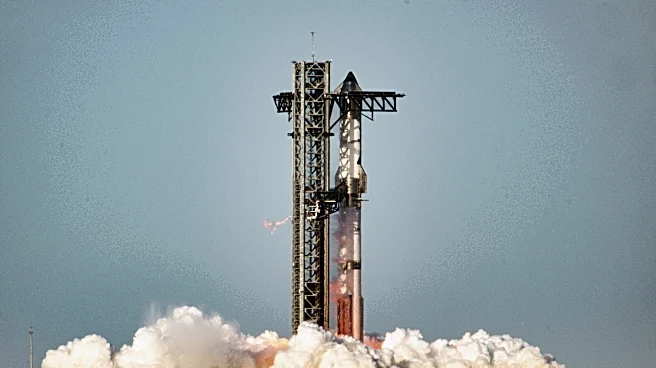
German startup Orbital Matter has achieved a significant milestone by 3D printing a half-meter long rigid beam in the vacuum of space. This was accomplished by their satellite, Replicator-2, which launched on a SpaceX rideshare mission. The satellite carried
four 3D printers that extrude coils of resin, cured by ultraviolet light, to create the rigid cylindrical beams. This marks the first time a free-flying spacecraft in orbit has successfully manufactured such a structure. According to Jakub Stojek, CEO and co-founder of Orbital Matter, this demonstration proves the feasibility of building large structures in space, overcoming the limitations of deploying pre-fabricated, folded components.
Why It's Important?
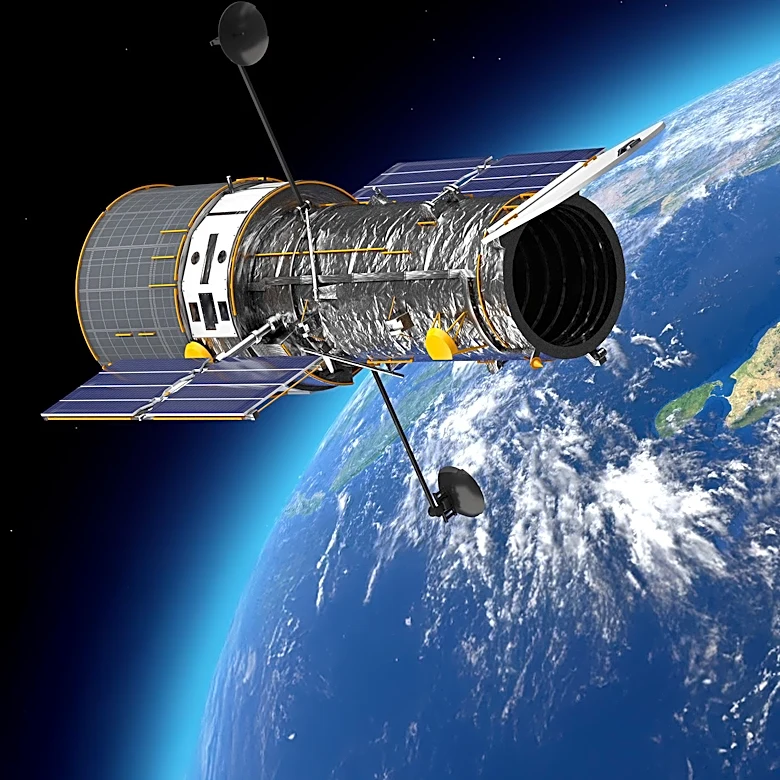
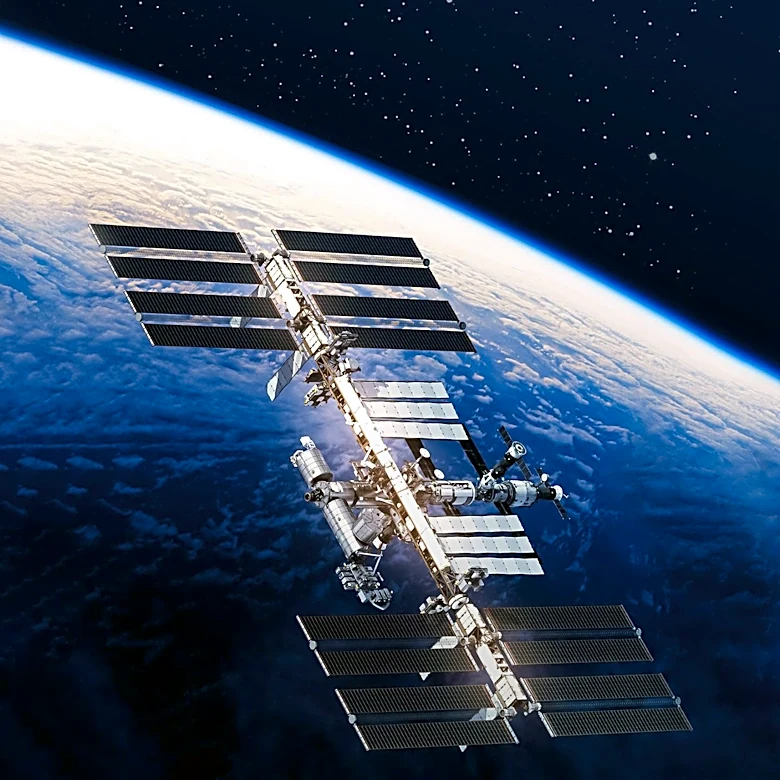
This breakthrough is crucial for the future of space infrastructure. Currently, large space structures like solar arrays and telescope mirrors must be folded to fit within rocket fairings and then deployed in orbit, a complex and often risky engineering challenge. In-orbit manufacturing, as demonstrated by Orbital Matter, offers a solution by allowing structures to be built directly in space, potentially enabling much larger and more robust spacecraft. This technology could facilitate the creation of more powerful satellites with greater electrical generation and heat dissipation capabilities, essential for future applications like orbital data centers. NASA has also explored similar concepts, highlighting the strategic importance of this capability for national space endeavors.
What's Next?
Orbital Matter plans another demonstration mission in 2028 to test a larger version of its printer on a bigger satellite, aiming to deploy a solar array capable of generating 5 kW of power. This is a stepping stone towards larger deployments of over 100 kW per wing by 2030. The company is also collaborating with satellite builders to integrate its Printer-Assisted Deployment System (PADS) for extending solar panels, antennas, and other components. This technology could revolutionize satellite design and deployment, leading to more versatile and powerful space assets. Continued development will focus on increasing the length and complexity of 3D-printed structures, with engineers believing 100-meter booms are feasible.
Beyond the Headlines
The ability to 3D print structures in space opens up profound possibilities beyond just larger satellites. It could enable the construction of entirely new types of space infrastructure, such as large-scale space habitats, advanced observatories, or even components for lunar and Martian bases. This shift towards in-space manufacturing could significantly reduce launch costs and risks associated with deploying massive structures from Earth. Furthermore, it fosters a more sustainable approach to space exploration by potentially allowing for the repair and modification of existing spacecraft in orbit. This technological advancement represents a fundamental change in how humanity will build and operate in the space environment, paving the way for more ambitious and complex missions.