





What's Happening?
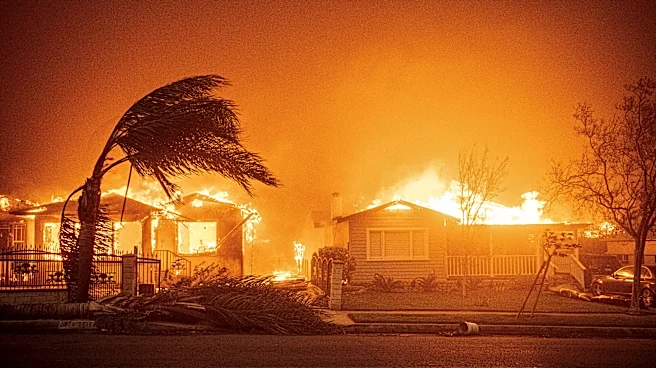
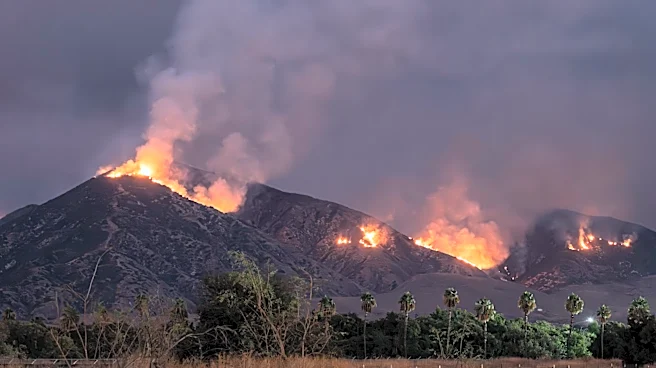
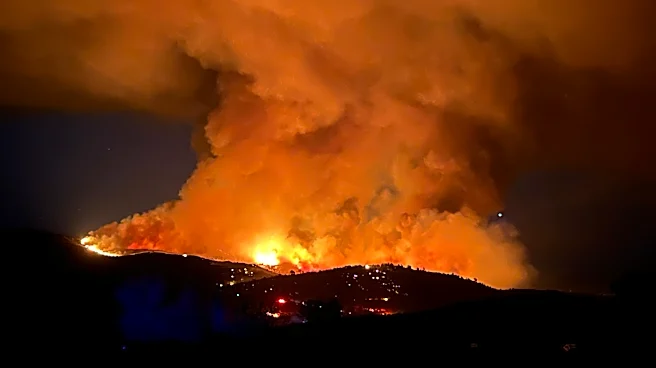
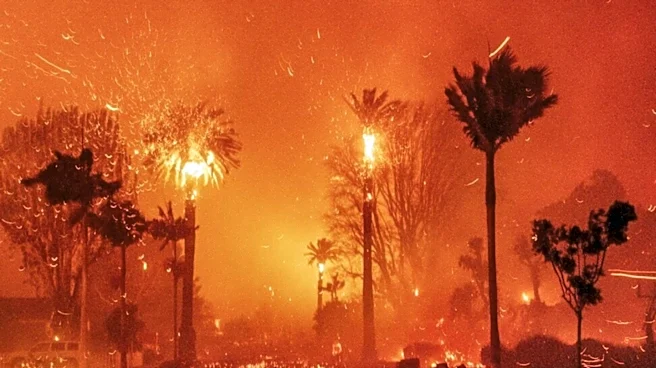
The L.A. County Fire Department has concluded that the Eaton Fire, which resulted in 19 fatalities and the destruction of nearly 10,000 homes, was caused by Southern California Edison equipment. The fire ignited on January 7, 2025, due to arcing electrical
lines near an Edison transmission tower in Eaton Canyon. The investigation, assisted by Cal Fire, determined that hot metal particles ejected from the lines fell into dry vegetation, sparking the fire. Southern California Edison has acknowledged the likelihood of its equipment being involved in the fire's ignition and has offered over $775 million in claims to affected individuals. The report's release comes amid ongoing lawsuits against the utility, with a trial date set for January 2027.
Why It's Important?
The findings have significant implications for Southern California Edison, as they may influence the outcome of pending lawsuits and compensation claims. The report provides clarity to affected communities, particularly in Altadena, where the majority of the destruction occurred. The utility's acknowledgment of its equipment's role in the fire could lead to increased scrutiny and regulatory pressure on infrastructure maintenance and safety standards. The financial impact on Edison is substantial, with compensation claims already exceeding $775 million, and further legal challenges could increase this burden.
What's Next?
The report's findings will likely play a crucial role in the upcoming trial against Southern California Edison, potentially affecting the utility's liability and financial obligations. The L.A. County Fire Department's conclusions may also prompt regulatory reviews and changes in safety protocols for electrical infrastructure. Edison may face increased pressure to enhance its equipment maintenance and safety measures to prevent future incidents. The community's demand for accountability and compensation will continue to shape the legal and public discourse surrounding the fire.
Beyond the Headlines
The Eaton Fire highlights broader issues of infrastructure safety and corporate responsibility in disaster management. The incident underscores the need for utilities to prioritize safety and maintenance to prevent catastrophic events. It also raises questions about the adequacy of existing regulatory frameworks in ensuring public safety and holding corporations accountable for negligence. The community's response to the fire reflects a growing demand for transparency and accountability from large corporations, particularly in the context of environmental and public safety.