







What's Happening?
The National Science Foundation (NSF) has announced a series of new programs and initiatives designed to further the vision outlined in the White House's 'Science: A New Golden Age' report. These efforts build upon a previous $1.5 billion investment in U.S.
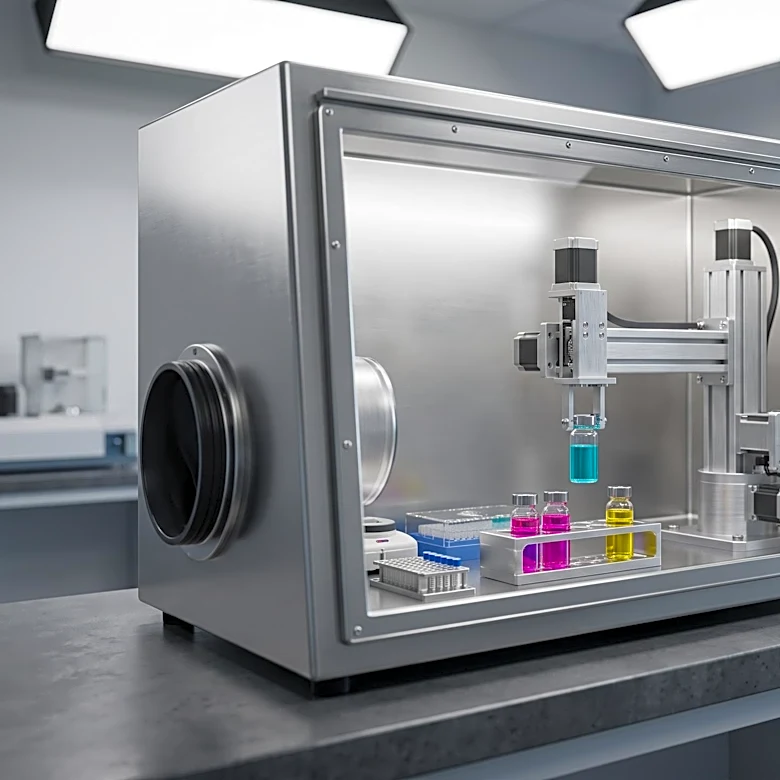
science and technology. A key development is the establishment of an Office of Metascience, which will focus on improving research funding and review processes to accelerate scientific discovery, sharing its findings with academia, industry, and philanthropic organizations. The NSF is also launching two Grand Research Challenge competitions: the Quantum+X challenge, aimed at developing quantum computing applications for various industries, and the Synthetic Multicellularity Prize, supporting advances in engineering biology. To facilitate the transition of research into practical applications, the NSF X-Labs Consortium is being introduced, backed by over $300 million in commitments from research institutions, computing centers, philanthropic organizations, and industry partners. This consortium will provide access to facilities, instruments, and technical expertise for milestone-based research projects. Additionally, the NSF plans to invest up to $75 million over five years in 'super intelligence-native instruments,' which are digital-first scientific tools integrating advanced artificial intelligence and automation into research workflows. Workforce initiatives include a $30 million investment in National Math Stars to identify and develop young mathematical talent, and the NextGen Workforce program to accelerate STEM career pathways through new bachelor's-to-doctoral degree programs and interdisciplinary graduate training.
Why It's Important?
These initiatives are crucial for strengthening U.S. scientific leadership and modernizing the national research enterprise. The creation of the Office of Metascience signifies a commitment to optimizing the efficiency and effectiveness of research funding, which could lead to more impactful discoveries and a better return on investment for federal research dollars. The Grand Research Challenges in quantum computing and synthetic biology target emerging fields with the potential for significant economic and societal impact, fostering innovation that could drive new industries and solve complex problems in areas like energy, biotechnology, and finance. The NSF X-Labs Consortium addresses a critical gap in translating basic research into practical applications, ensuring that groundbreaking ideas move from laboratories to the marketplace more efficiently. Investments in super intelligence-native instruments will integrate advanced AI into scientific research, potentially revolutionizing discovery processes and enhancing the nation's technological capabilities. Furthermore, the focus on workforce development through programs like National Math Stars and NextGen Workforce is vital for cultivating the next generation of STEM talent, ensuring a skilled workforce capable of sustaining and advancing U.S. innovation and competitiveness in a global landscape. These programs aim to broaden participation in STEM, addressing the need for a diverse and robust scientific and engineering workforce.
What's Next?
The NSF will proceed with the operationalization of the Office of Metascience, which will begin studying and sharing findings on research funding and review processes. The Grand Research Challenge competitions, Quantum+X and Synthetic Multicellularity, will likely see calls for proposals and the selection of initial projects, driving focused research in these high-priority areas. The NSF X-Labs Consortium will commence its activities, providing resources and support for milestone-based research projects aimed at accelerating the transition of discoveries to application. The $75 million investment in super intelligence-native instruments will lead to the development and deployment of advanced AI-integrated scientific tools. Concurrently, the National Math Stars and NextGen Workforce programs will begin identifying and supporting talented students and early-career researchers, with the goal of accelerating STEM career pathways. These initiatives are expected to unfold over the coming years, with ongoing evaluations of their effectiveness in strengthening U.S. scientific leadership, modernizing research, and developing the STEM workforce. The NSF will continue to collaborate with various stakeholders, including academia, industry, and philanthropic organizations, to ensure the success and broad impact of these programs.
Beyond the Headlines
The NSF's comprehensive approach extends beyond immediate scientific breakthroughs, aiming to foster a more robust and equitable scientific ecosystem. The emphasis on metascience reflects a deeper commitment to understanding and improving the very mechanisms of scientific progress, potentially leading to systemic changes in how research is conducted and funded across the nation. By actively seeking to broaden participation in STEM through initiatives like National Math Stars and NextGen Workforce, the NSF is addressing long-standing issues of diversity and inclusion in science and engineering. This focus acknowledges that a wider range of perspectives and talents is essential for maximizing innovation and ensuring that scientific advancements benefit all segments of society. The integration of AI into scientific instruments signifies a paradigm shift in research methodology, moving towards more automated and data-driven discovery processes, which could accelerate the pace of scientific progress exponentially. The consortium model for translating research into application also highlights a growing recognition of the need for collaborative, multi-sector efforts to tackle complex challenges and ensure that scientific knowledge translates into tangible societal and economic benefits. These initiatives collectively underscore a strategic vision for the U.S. to maintain its global leadership in science and technology for decades to come.