



What's Happening?
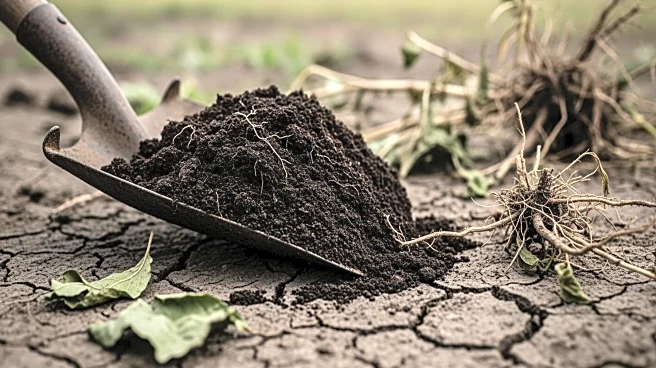
In Jamalpur, Bangladesh, an organized group is illegally removing fertile topsoil from agricultural land, posing a significant threat to food security and environmental sustainability. This activity, occurring primarily at night, involves the use of heavy
machinery to extract soil, which is then sold to brick kilns and construction businesses. The removal of topsoil, essential for crop production, has already begun to degrade farmland, while the constant movement of heavy vehicles has damaged local roads and disrupted community life. Local residents report that this has been ongoing for months, with trucks and tractors operating nightly, seemingly evading local authority oversight. Despite laws prohibiting soil removal from agricultural land, landowners are reportedly coerced or financially incentivized to allow this activity. Fear of retaliation by influential individuals has prevented many from speaking out.
Why It's Important?
The illegal removal of topsoil in Jamalpur has far-reaching implications for agricultural productivity and environmental health. The top 8 to 10 inches of soil contain the core nutrients necessary for crop production, and once removed, the land becomes infertile for years. This could lead to a significant decline in agricultural yields, requiring farmers to use more fertilizers, which may not fully compensate for the loss of natural soil fertility. The degradation of farmland threatens long-term food security in the region, potentially impacting local economies and livelihoods. Additionally, the environmental impact includes the destruction of local roads and disruption of community life, highlighting the need for effective enforcement of environmental and land protection laws.
What's Next?
Local authorities, including the Sadar Upazila Nirbahi Officer, have acknowledged the issue and are investigating. Legal action is expected based on the findings of these investigations. Environmentalists are urging swift action to prevent further soil extraction and protect the remaining arable land. The situation calls for increased oversight and enforcement of existing laws to deter illegal activities and safeguard the region's agricultural and environmental resources.