


What's Happening?
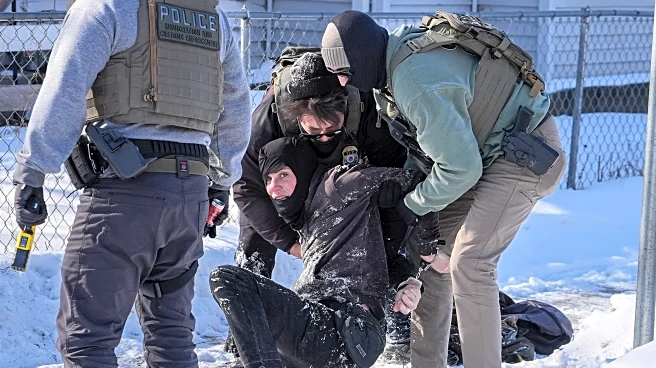
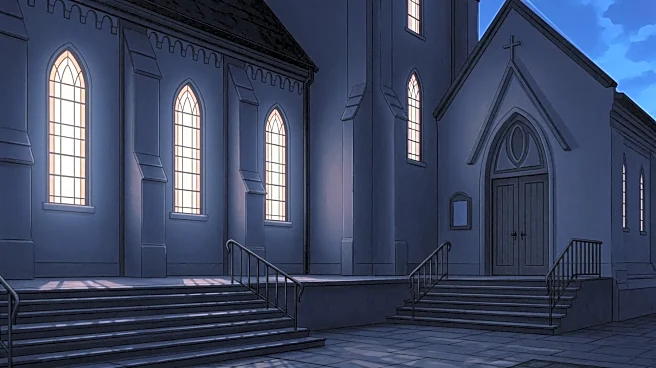
In Minnesota, a civil rights attorney and two others were arrested following a protest at a church service, which was disrupted by anti-immigration enforcement demonstrators. The protest took place at Cities Church in St. Paul, where a pastor also serves
as a local official with U.S. Immigration and Customs Enforcement (ICE). The protestors chanted against ICE and called for justice for Renee Good, a woman fatally shot by an ICE officer. The Justice Department swiftly opened a civil rights investigation into the protest, contrasting its decision not to investigate Good's death. Vice President JD Vance, visiting the state, warned of prison terms for the protestors. Meanwhile, a judge dismissed charges against journalist Don Lemon, who was present at the protest to report on the event.
Why It's Important?
This incident highlights ongoing tensions between immigration enforcement and civil rights activists in the U.S. The arrests underscore the federal government's stance on maintaining law and order, particularly in sensitive areas like places of worship. The swift action by the Justice Department to investigate the protest, while declining to probe the shooting of Renee Good, reflects a prioritization of protecting religious spaces over addressing potential civil rights violations by law enforcement. This could have implications for how similar protests are handled in the future and may influence public perception of the administration's immigration policies. The dismissal of charges against Don Lemon also raises questions about press freedom and the role of journalists in covering protests.
What's Next?
The Justice Department's investigation into the protest will continue, potentially leading to further legal actions against those involved. The administration's approach to immigration enforcement and its impact on local communities will likely remain a contentious issue. The outcome of this case could set precedents for how protests at religious sites are managed and how journalists are treated in such situations. Additionally, the broader implications for civil rights and immigration policy may prompt further debate and legislative scrutiny.