




What's Happening?
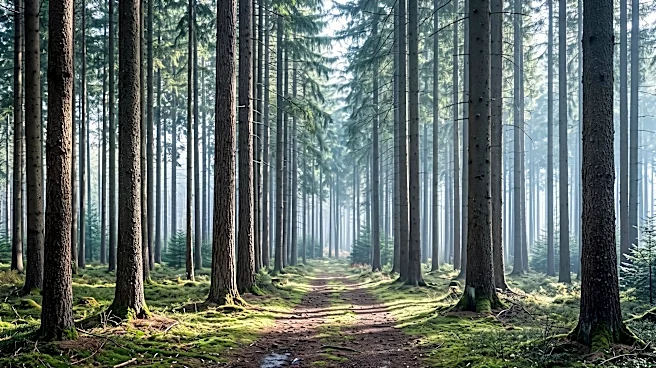
The Nature Conservancy (TNC), in collaboration with state and federal partners, has planted 3.2 million tree seedlings across northern Minnesota this year. This initiative marks TNC's largest tree-planting season in the state's history. The effort involved
four large crews planting 20 diverse tree species, including white and red pine, white spruce, red oak, jack pine, white cedar, paper birch, and yellow birch. These seedlings were planted by hand over nearly 5,600 acres of public land, specifically targeting areas affected by wildfire, invasive insects, or those that could benefit from habitat improvement. The project also included planting along the North Shore and near streams to support fisheries. This season's planting contributes to TNC's broader goal of planting 17 million trees in northern Minnesota by 2030, building on the approximately 16 million trees already planted over the past two decades in areas like the Superior and Chippewa National Forests.
Why It's Important?
This extensive tree-planting effort is crucial for restoring and enhancing the resilience of Minnesota's forests, which have significantly declined from an original 31.5 million acres to about 18 million acres due to historical timber harvesting and, more recently, climate change. By planting a diverse array of native and climate-adaptable species, TNC aims to create a healthier, more adaptable, and climate-resilient forest ecosystem. This initiative directly addresses the ecological impacts of climate change and past environmental degradation, contributing to biodiversity and ecosystem services. The long-term success of these plantings, supported by ongoing monitoring, temporary fencing, and brush clearing, will ensure the forests can withstand future challenges, benefiting wildlife, water quality, and the overall environmental health of the region. The collaboration between TNC and various state and federal partners highlights a significant public-private commitment to conservation.
What's Next?
Following the initial planting, crews will return to monitor the newly planted trees to ensure their survival and growth. This monitoring will include protecting the seedlings from browsing wildlife through temporary fencing and bud capping, and clearing brush that could hinder their development. The Nature Conservancy plans to continue its ambitious goal of planting a total of 17 million trees in northern Minnesota by 2030, indicating sustained efforts in forest restoration over the coming years. This ongoing commitment will involve further partnerships with the Minnesota Department of Natural Resources, Superior and Chippewa National Forests, and local counties. The success of these future plantings will depend on continued scientific guidance in selecting appropriate species and sites, as well as the dedication of planting crews and the support of various stakeholders.
Beyond the Headlines
This large-scale reforestation project underscores a proactive approach to environmental stewardship in the face of climate change and historical land use impacts. Beyond the immediate ecological benefits of increased forest cover and biodiversity, the initiative represents a significant investment in natural infrastructure. Healthy forests play a vital role in carbon sequestration, mitigating the effects of climate change, and providing essential ecosystem services such as clean air and water. The focus on planting climate-adaptable species, some grown from seeds collected farther south to anticipate future climate conditions, reflects a forward-thinking strategy in conservation. This approach acknowledges the dynamic nature of ecosystems and the need for adaptive management to ensure long-term ecological stability and resilience against future environmental stressors.