









What's Happening?
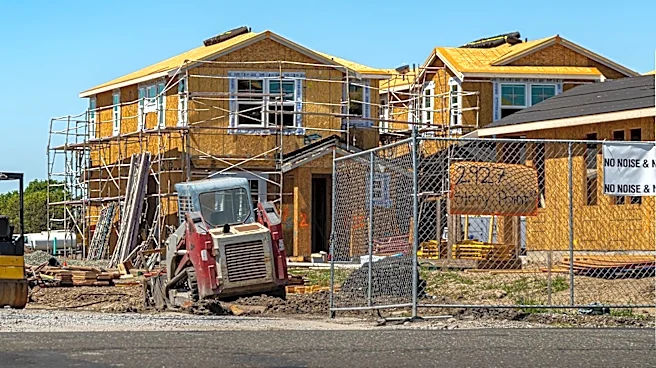
St. Vincent de Paul Society of Lane County has expanded its Saginaw Mobile Home Park in Cottage Grove, Oregon, by adding 10 new affordable homes, each costing less than $100,000. These homes are manufactured by HOPE Homes, a partner nonprofit that specializes
in producing one and two-bedroom units at significantly reduced prices. The executive director, Bethany Cartledge, noted that while traditional affordable units can cost around $200,000, these new HOPE homes are priced at approximately $68,000 for a one-bedroom and $80,000 for a two-bedroom unit, with total installed costs around $100,000 each. The homes meet various code requirements, including those from the U.S. Department of Housing and Urban Development, and are Energy Star’s NEEM+ certified, emphasizing energy efficiency. HOPE Homes achieves these low costs through its nonprofit status, factory-based construction, standardized designs, and a workforce development model that trains new tradespeople.
Why It's Important?
This initiative by St. Vincent de Paul and HOPE Homes represents a significant step in addressing the affordable housing crisis in the U.S., particularly in regions like Oregon where housing costs are high. By providing well-built, energy-efficient homes at a fraction of the typical market price, the project offers a viable model for increasing housing stock for low-income individuals and families. The cost-effectiveness of these homes makes them accessible to a broader population, helping to shorten waitlists for affordable housing and reduce homelessness. Furthermore, HOPE Homes' approach to workforce development, training new tradespeople in their factory, addresses a critical labor shortage in the construction industry while simultaneously creating employment opportunities. This dual impact on housing and employment makes the project a notable example of community-based solutions to complex societal challenges.
What's Next?
St. Vincent de Paul plans to continue expanding its affordable housing inventory using the HOPE Homes model, with 30 of the 64 HOPE homes built so far already acquired by the organization. This ongoing commitment suggests that the partnership will likely lead to more affordable housing developments in Oregon. The success of this model could also inspire other non-profit organizations and housing authorities across the U.S. to explore similar factory-built, standardized housing solutions to combat rising housing costs. The innovative workforce training program within HOPE Homes could also be replicated to address skilled labor shortages in other industries. Continued monitoring of the long-term sustainability and community integration of these homes will be essential to fully assess their impact and potential for broader adoption.
Beyond the Headlines
The St. Vincent de Paul and HOPE Homes project highlights a deeper societal shift towards innovative and sustainable solutions for housing and workforce development. Beyond simply providing shelter, this initiative challenges conventional construction paradigms by demonstrating that high-quality, energy-efficient homes can be produced affordably through streamlined processes and a focus on social impact. The model's emphasis on training new tradespeople addresses not only the immediate need for labor but also fosters economic empowerment and skill development within communities. This approach could catalyze a broader re-evaluation of how housing is developed and how labor is trained in the U.S., potentially leading to more resilient and equitable communities. It underscores the power of non-profit collaboration in tackling systemic issues and creating lasting positive change.