



What's Happening?
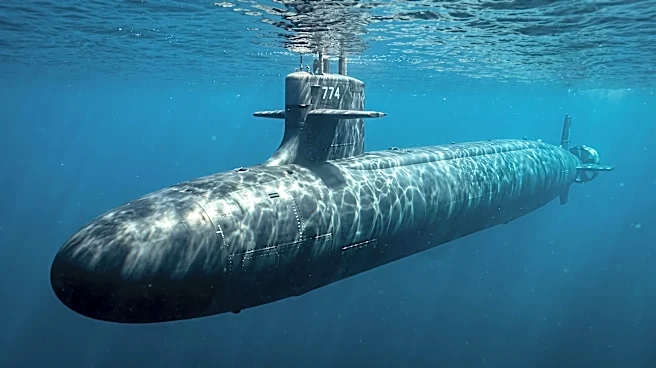
The United States Navy is facing a significant challenge from China's rapid expansion of its nuclear-powered submarine fleet, as highlighted by Rear Adm. Chris Cavanaugh, commander of Submarine Forces, US Pacific Fleet (COMSUBPAC). During the Navy Submarine League’s
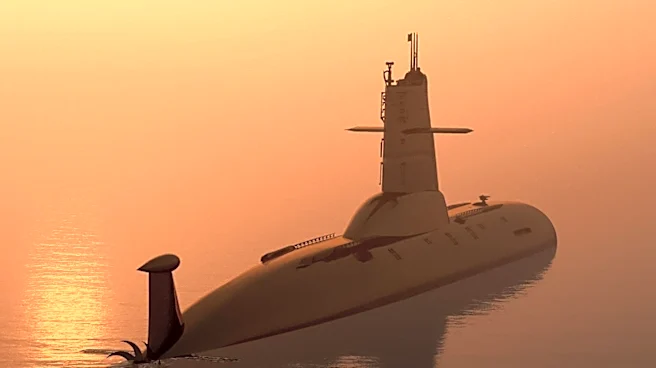
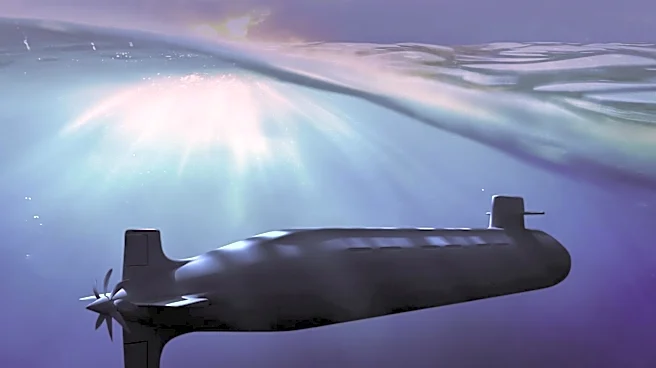
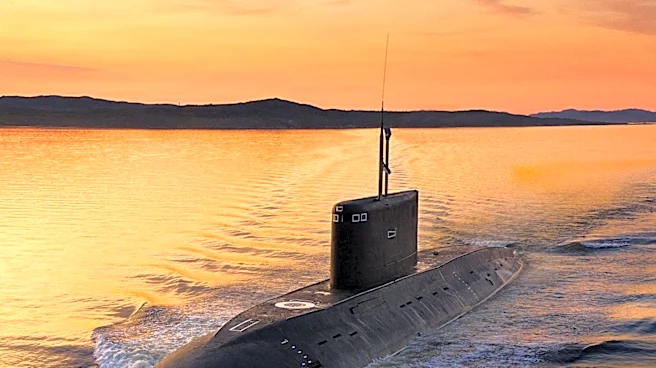
2026 Annual Symposium, Rear Adm. Cavanaugh reported that China has commissioned eight Type 093B Shang III nuclear attack submarines in less than four years. U.S. assessments suggest that Chinese shipyards could maintain this production pace for another decade, potentially adding 20 to 40 more Shang III or improved submarines. These new submarines, particularly the Shang III, represent a substantial upgrade with improved acoustic quieting, propulsion changes, and 24 vertical launch cells for missiles, effectively making them a new class. China is also developing the Type 095 nuclear-powered guided-missile submarine and the Type 096 ballistic missile submarine, which would enhance its sea-based nuclear deterrent and second-strike capability. Beyond submarines, China is investing heavily in oceanographic research, seabed mapping, unmanned underwater vehicles (UUVs), and supporting infrastructure, which could provide its submarines with a tactical advantage in understanding underwater conditions.
Why It's Important?
This rapid expansion of China's submarine fleet poses a direct challenge to the U.S. Navy's undersea dominance and has significant implications for national security and geopolitical stability. The increased number and improved capabilities of Chinese submarines could alter the balance of power in critical maritime regions, particularly in the Pacific. China's enhanced second-strike capability, provided by advanced ballistic missile submarines, could complicate strategic deterrence calculations for the United States and its allies. Furthermore, China's investments in oceanographic research and UUVs suggest a broader strategy to gain comprehensive control and understanding of the underwater domain, which could impact naval operations, intelligence gathering, and potential conflict scenarios. The U.S. Navy will need to adapt its strategies, investments, and deployments to counter this growing threat, potentially leading to increased defense spending and a renewed focus on undersea warfare capabilities.
What's Next?
In response to China's expanding undersea capabilities, the U.S. Navy is likely to accelerate its own submarine development and procurement programs, focusing on advanced technologies for detection, stealth, and offensive capabilities. There may be increased emphasis on collaborative efforts with allies in the Indo-Pacific region to enhance collective undersea warfare capabilities and intelligence sharing. The U.S. government may also engage in diplomatic efforts to address the arms race in the undersea domain and promote transparency. Furthermore, there could be a push for greater investment in anti-submarine warfare (ASW) technologies and training to maintain a qualitative edge. The ongoing development of China's Type 095 and Type 096 submarines will be closely monitored, as their deployment would further escalate the strategic competition in the maritime domain.
Beyond the Headlines
The expansion of China's submarine fleet extends beyond conventional military competition, touching upon broader technological and strategic implications. China's extensive seabed mapping and oceanographic research could have dual-use applications, serving both scientific and military objectives, potentially enabling more effective submarine operations and control over critical underwater infrastructure. This development also highlights a global trend of increasing investment in autonomous underwater vehicles, which could revolutionize naval warfare and intelligence gathering. The ethical implications of advanced undersea surveillance and potential for undetected operations raise questions about international maritime law and the future of naval engagement. The long-term shift could see a more contested and opaque underwater environment, requiring new doctrines and international agreements to manage potential conflicts and ensure maritime security.