
What's Happening?
The US-Colombia Strategic Alignment Coalition, an initiative of the Atlantic Council, has released a new report recommending an updated strategy for the bilateral relationship between the United States
and Colombia. This strategy emphasizes moving beyond solely military efforts to recover territory from illegal armed groups, advocating for a combined approach that integrates security operations with rural investments, community protection, and institutional strengthening in conflict-affected regions. The report suggests leveraging a proposed $1 billion U.S. assistance package to support these efforts. The coalition, formed as a successor to the US-Colombia Task Force established in 2017, comprises former high-ranking officials and diplomats from both countries, alongside security, development, and private sector experts. Their analysis indicates a significant increase in the number of armed group members in Colombia, from 15,120 in late 2022 to 28,802 by July 2026, and a doubling of areas where these groups directly dispute territorial control. These groups are reportedly acting as parallel authorities, imposing restrictions, extorting communities, and controlling economic activities.
Why It's Important?
This report is important because it highlights a critical shift in understanding the nature of the conflict in Colombia and proposes a more comprehensive U.S. engagement strategy. By advocating for a focus on state presence, civil institutions, and economic opportunities rather than just military recovery, the Atlantic Council suggests a path toward more sustainable peace and stability. The proposed $1 billion U.S. assistance package, if approved by the U.S. Congress, could significantly influence the implementation of these recommendations. The involvement of high-profile former U.S. officials, such as former Ambassador Kevin Whitaker and former SOUTHCOM Commander General Laura Richardson, underscores the strategic importance of the U.S.-Colombia relationship. The report's emphasis on addressing the root causes of conflict, such as weak state presence and lack of economic opportunities, could serve as a model for U.S. foreign policy in other regions facing similar challenges, potentially leading to more effective and lasting solutions.
What's Next?
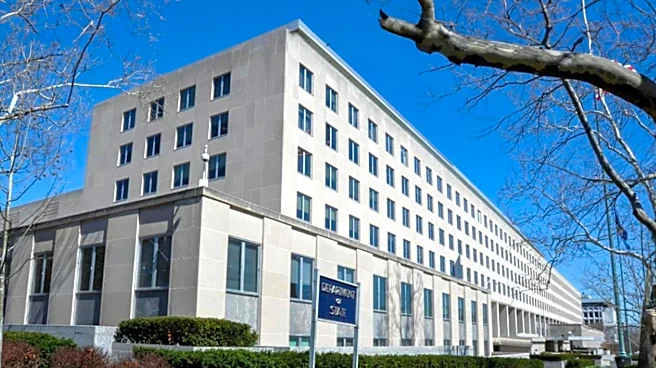
The proposed $1 billion U.S. assistance package still requires processing and approval by the U.S. Congress. If approved, the recommendations outlined by the Atlantic Council's US-Colombia Strategic Alignment Coalition will guide how these funds are utilized. The report suggests specific actions, including strengthening state capacity to protect populations in disputed zones, improving communication systems for early warnings, enhancing mobility for security forces, and increasing the presence of National Police Carabineros in rural areas. Furthermore, it recommends channeling investments into community-identified projects from the Territorial Development Programs with a Territorial Approach (PDET) and expanding the use of 'Works for Taxes' mechanisms to attract private sector investment. The coalition also proposes utilizing existing U.S. funds, such as $15 million for human rights activities and $25 million for Afro-Colombian and indigenous communities, to bolster state presence and economic opportunities. Efforts to curb child recruitment by armed groups, through technical assistance from the U.S. Department of State's INL, are also on the agenda.
Beyond the Headlines
The Atlantic Council's recommendations delve into the deeper implications of the evolving conflict in Colombia, moving beyond traditional security paradigms. The report implicitly acknowledges that military victories alone are insufficient for long-term stability, highlighting the ethical and societal imperative of establishing robust state institutions and economic alternatives. The focus on community-led development projects (PDETs) and the 'Works for Taxes' mechanism suggests a shift towards empowering local populations and fostering sustainable economic growth, which could reduce the appeal of illegal armed groups. The emphasis on protecting human rights, particularly for social leaders and vulnerable communities, addresses a critical ethical dimension of the conflict. Furthermore, the explicit link between weak state presence, lack of opportunities, and child recruitment underscores the long-term societal costs of instability and the need for comprehensive, multi-faceted interventions to break cycles of violence and poverty. This approach could set a precedent for how the U.S. engages with complex conflicts globally, prioritizing holistic development alongside security.