









What's Happening?
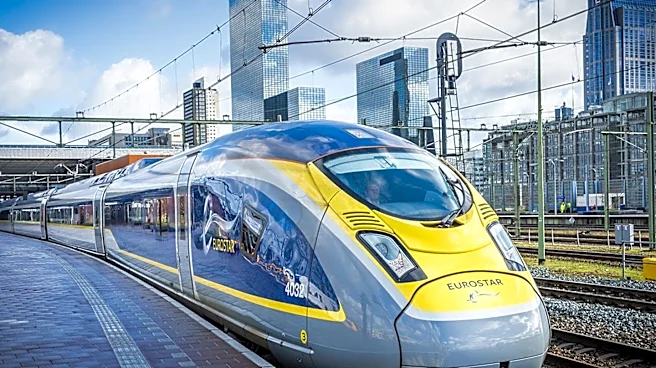
Eurostar has released a report, commissioned from policy consultancy Public First, detailing the economic impact of its high-speed train services on the UK. The report, titled 'Fast track to growth: Boosting Britain through international high speed rail,'
emphasizes Eurostar's role as a significant piece of national infrastructure that enhances the UK's economy, provides high-quality jobs, and fosters cultural ties. According to the report, Eurostar supported 23,000 jobs and contributed nearly £2 billion in economic activity in 2025, with projections to increase to 40,000 jobs and a £2.8 billion contribution by 2035. The report also highlights Eurostar's direct economic footprint of £213 million annually and a supply chain footprint of £770 million per year. Eurostar CEO Gwendoline Cazenave advocates for further investment in international rail, emphasizing the need for more depot capacity and expansion of London St Pancras to maintain the UK's leading role in Europe's high-speed rail future.
Why It's Important?
The findings underscore the strategic importance of high-speed rail in enhancing the UK's economic competitiveness and connectivity. By supporting thousands of jobs and contributing significantly to the economy, Eurostar exemplifies how infrastructure investments can drive productivity and growth. The report's emphasis on private investment and public framework collaboration highlights a potential model for future infrastructure projects. The projected increase in jobs and economic contribution by 2035 suggests that continued investment in high-speed rail could yield substantial economic benefits, positioning the UK as a key player in European rail networks. This could lead to increased business opportunities, improved transportation efficiency, and stronger international ties.
What's Next?
Eurostar's future plans include introducing Alstom double-deck trains and increasing service frequencies, which are expected to enhance productivity benefits significantly. The report calls for a bold vision from the UK government to match private investments, suggesting that policy decisions in the coming years will be crucial in determining the extent of high-speed rail's impact. Stakeholders, including government bodies and private investors, will likely engage in discussions to align on infrastructure expansion and investment strategies. The outcome of these discussions could shape the UK's transportation landscape and its role in the broader European rail network.