



What's Happening?
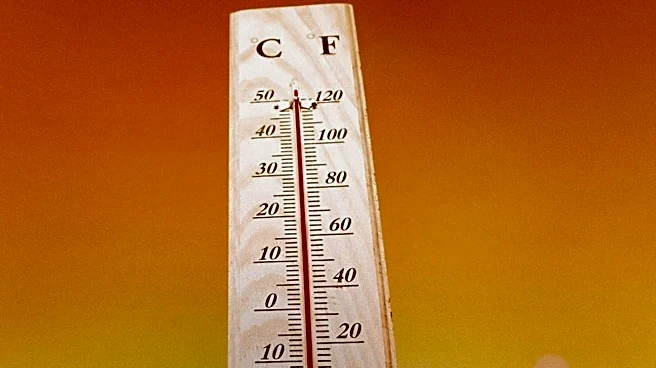
New York City Hall is facing criticism for failing to adhere to Mayor Zohran Mamdani's recommendation to set air conditioners to 78 degrees Fahrenheit during a heatwave. Despite the mayor's directive, temperatures inside City Hall dropped as low as 54
degrees, significantly below the suggested setting. This discrepancy was highlighted by reporters who measured temperatures in various municipal buildings, revealing inconsistencies with the mayor's energy-saving initiative. The recommendation aims to prevent power outages by reducing strain on the electrical grid, a practice supported by the U.S. Department of Energy. However, the failure to implement this policy within City Hall has drawn public scrutiny and political backlash.
Why It's Important?
The situation underscores the challenges of implementing energy conservation measures in public buildings, especially during extreme weather conditions. The mayor's recommendation is part of broader efforts to manage energy consumption and prevent power outages, which are critical during heatwaves. The inability to maintain consistent temperatures within City Hall raises questions about the effectiveness of such policies and the commitment of public institutions to lead by example. This incident may affect public perception of the administration's environmental policies and could influence future energy management strategies in municipal buildings.
What's Next?
In response to the publicized temperature discrepancies, City Hall officials have adjusted the air conditioning settings to align with the recommended levels. The administration may face increased pressure to ensure compliance with energy-saving measures across all municipal buildings. This situation could prompt a review of current practices and the implementation of stricter monitoring to prevent similar issues in the future. Additionally, the incident may lead to discussions on improving infrastructure and technology to better manage energy use during peak demand periods.