
What's Happening?
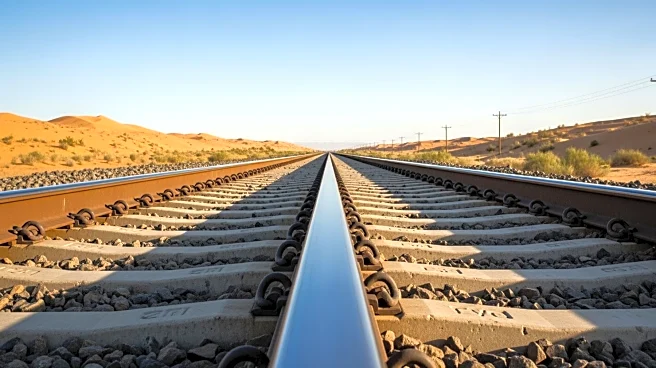
Egypt has commenced the track-laying phase of its first high-speed, electrified rail corridor, known as the 'Green Line.' This ambitious project aims to connect the Red Sea with the Mediterranean, significantly
altering the movement of people and goods across the country. The 'Green Line' is part of a larger plan to establish a 2,000-kilometer high-speed rail network that will integrate seaports, logistics hubs, industrial zones, and tourism centers. The initial segment of the line will stretch approximately 660 kilometers from Ain Sokhna on the Red Sea to Alexandria and Marsa Matrouh on the Mediterranean. The project is being managed by Siemens Mobility in partnership with Egyptian contractors Orascom Construction and The Arab Contractors. The rail line is expected to carry both passengers and freight, reducing coast-to-coast travel time to as little as three hours.
Why It's Important?
The high-speed rail project is a strategic initiative for Egypt, aiming to modernize its transportation infrastructure and enhance economic connectivity. By providing a fast overland route between the Red Sea and the Mediterranean, the rail line is expected to complement the Suez Canal, supporting domestic mobility and logistics. The project is also seen as a catalyst for urban development, as it will connect major cities and industrial zones, potentially reshaping settlement patterns and boosting economic growth. The rail network is designed to carry up to 1.5 million passengers per day and 15 million tonnes of cargo annually, which could significantly alleviate pressure on Egypt's existing rail infrastructure and improve safety and efficiency.
What's Next?
The completion of the 'Green Line' is anticipated by 2026, with further expansions planned to extend the network's reach. The project will require extensive coordination and capacity-building efforts, including training local staff to operate and maintain the high-speed network. The Egyptian government has signed a 15-year operating contract with a consortium to ensure the network's efficient operation. As construction progresses, the focus will shift to integrating the rail line with local transit systems to maximize its impact on mobility and logistics. The project is expected to play a crucial role in Egypt's long-term economic strategy, enhancing its competitiveness in global trade.
Beyond the Headlines
The high-speed rail project represents more than just a transportation upgrade; it is a significant step towards sustainable development in Egypt. By reducing reliance on road transport, the rail network is expected to decrease traffic congestion and lower emissions, contributing to environmental goals. The project also highlights Egypt's efforts to diversify its economy and reduce vulnerability to global trade disruptions. As the rail network becomes operational, it could transform domestic tourism by making it easier to travel between key destinations, potentially boosting the tourism sector and creating new economic opportunities.