






What's Happening?
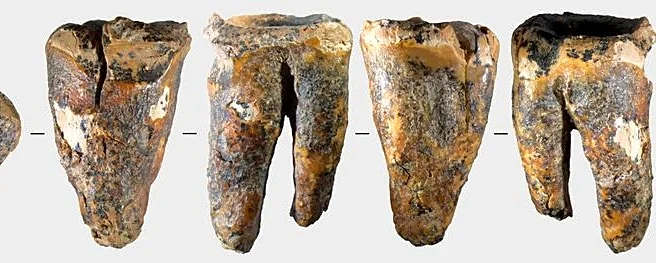
Researchers have successfully extracted ancient proteins from six Homo erectus teeth found in China, revealing a molecular connection between this prehistoric species and later human species, including Homo sapiens. This study, published in the journal
Nature, marks a significant advancement in understanding human evolution. The teeth, dating back approximately 400,000 years, were unearthed at three sites in China: Zhoukoudian, Hexian, and Sunjiadong. The research team, led by Chinese geneticist Fu Qiaomei, utilized a new, less invasive technique to analyze the enamel proteins, which are more robust than ancient DNA. This method allowed them to identify two amino acid variants shared among the specimens, one of which was previously unknown. The findings suggest that Homo erectus may have interbred with Denisovans, another ancient human species, and through them, contributed genetically to modern humans.
Why It's Important?
This discovery is crucial as it provides new insights into the complex web of human evolution, particularly in Asia. The study suggests that Homo erectus, a species that roamed the planet for nearly 2 million years, played a more significant role in the genetic makeup of modern humans than previously understood. The identification of shared amino acid variants between Homo erectus and Denisovans, and subsequently with Homo sapiens, highlights the interconnectedness of ancient human species. This research could reshape our understanding of human ancestry and the evolutionary processes that led to the development of modern humans. It also underscores the potential of protein analysis in paleontology, offering a new avenue for studying ancient species where DNA preservation is poor.
What's Next?
The study opens up new questions for future research, particularly regarding the extent of interbreeding between Homo erectus and other ancient human species. Further archaeological evidence could help confirm the connections suggested by the protein analysis. Researchers may also explore the possibility of extracting DNA from similar fossils to gain more detailed insights into the evolutionary relationships. The findings could lead to a reevaluation of the human evolutionary tree, especially concerning the role of Asian populations in the genetic history of modern humans.
Beyond the Headlines
The study's implications extend beyond the scientific community, potentially influencing cultural and historical narratives about human origins. Understanding the genetic contributions of ancient species like Homo erectus to modern humans could impact discussions on human diversity and migration patterns. Additionally, the research highlights the importance of preserving and studying ancient fossils, as they hold critical information about our past. The use of innovative techniques in paleontology could also inspire similar approaches in other fields, advancing our knowledge of ancient life on Earth.