



What's Happening?
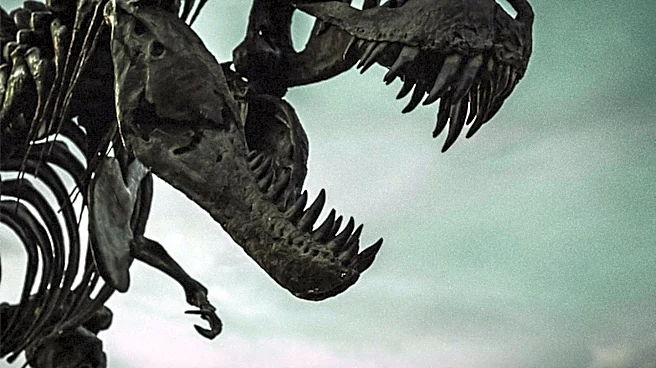
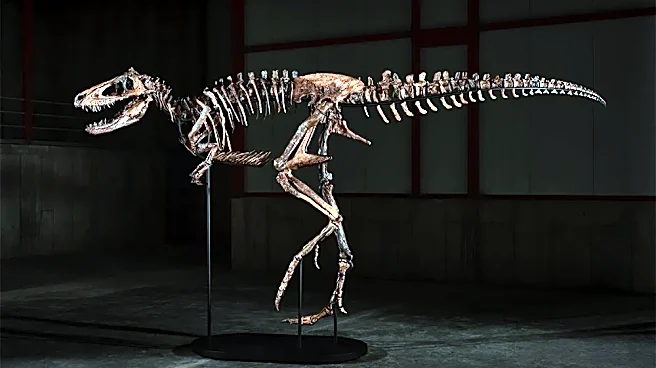
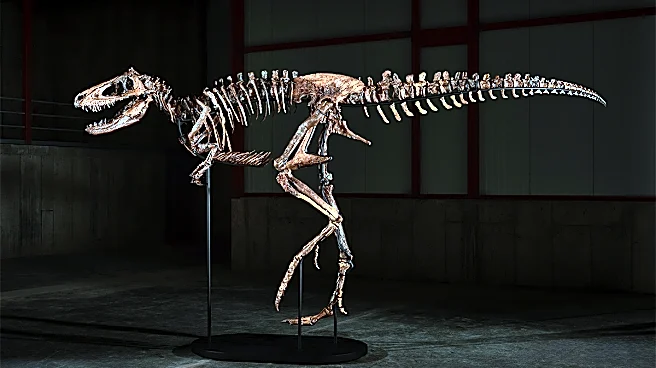
New fossil evidence is shedding light on the social behavior of Tyrannosaurus rex, suggesting a more complex social life than previously thought. While T. rex often walked alone, as indicated by sparse track records and single skeletons, trace fossils
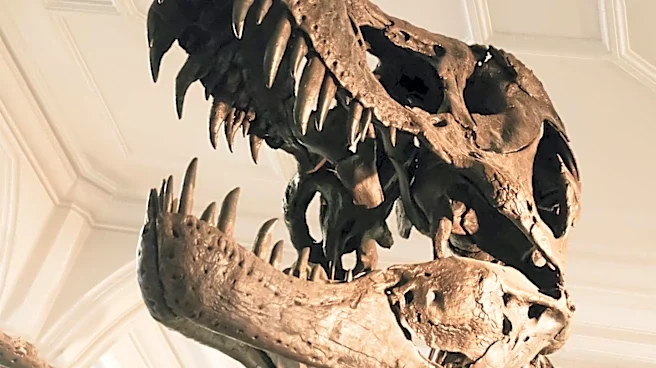
like bite marks on bones reveal significant social interactions. Approximately half of all large tyrannosaur skulls show healed puncture wounds, indicating that T. rex and related dinosaurs frequently engaged in face-biting. These wounds suggest conflicts, possibly over carcasses or territory, where their powerful jaws were the primary weapons. Despite the ferocity of these encounters, the presence of healed bones indicates that T. rex often survived, though likely enduring painful injuries.
Why It's Important?
Understanding the social behavior of T. rex is crucial for a comprehensive reconstruction of Late Cretaceous ecosystems. The evidence of frequent face-biting suggests a competitive and potentially hierarchical social structure, where disputes were resolved through direct physical confrontation. This behavior provides insights into their intraspecific interactions, resource allocation, and survival strategies. It challenges the simplistic view of T. rex as purely solitary hunters, hinting at a more nuanced social dynamic that could involve territoriality, mating rituals, or competition for food. Such findings help paleontologists build more accurate models of dinosaur behavior and the complex relationships within their communities, enriching our understanding of their ecological roles.
What's Next?
Future research will likely focus on analyzing more fossilized remains for similar bite marks and other trace fossils to further corroborate and expand upon these findings. Paleontologists may investigate the distribution and patterns of these wounds across different age groups and sexes of T. rex to infer more about the context of these conflicts, such as whether they were related to mating, dominance, or resource defense. Advanced imaging techniques and biomechanical studies could also provide deeper insights into the force and mechanics of these bites. The ongoing discovery and analysis of trace fossils will continue to be vital in piecing together the intricate social lives of these ancient predators, moving beyond mere anatomical descriptions to behavioral interpretations.
Beyond the Headlines
The revelation of T. rex's social interactions, particularly aggressive face-biting, adds a layer of complexity to its popular image as a fearsome, solitary hunter. This deeper understanding humanizes, in a sense, these ancient giants by showing they engaged in behaviors driven by competition and survival, much like many modern large predators. It highlights the power of trace fossils in revealing not just what animals looked like, but how they lived and interacted. This ongoing scientific inquiry encourages critical thinking about how we interpret the past and how new evidence can continually reshape our perceptions of even the most iconic prehistoric creatures, fostering a more dynamic and engaging view of paleontology.