






What's Happening?
Birmingham, Trussville, and Norfolk Southern, in collaboration with federal partners, have announced a $10 million project named R.E.D.E.S.I.G.N. Alabama. This initiative aims to resolve long-standing issues of railroad crossing delays between Woodlawn
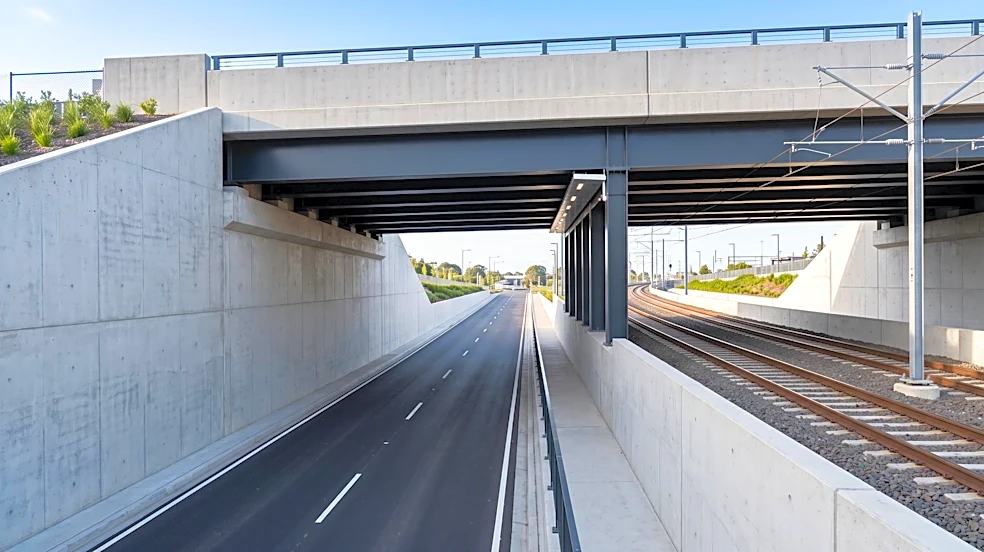
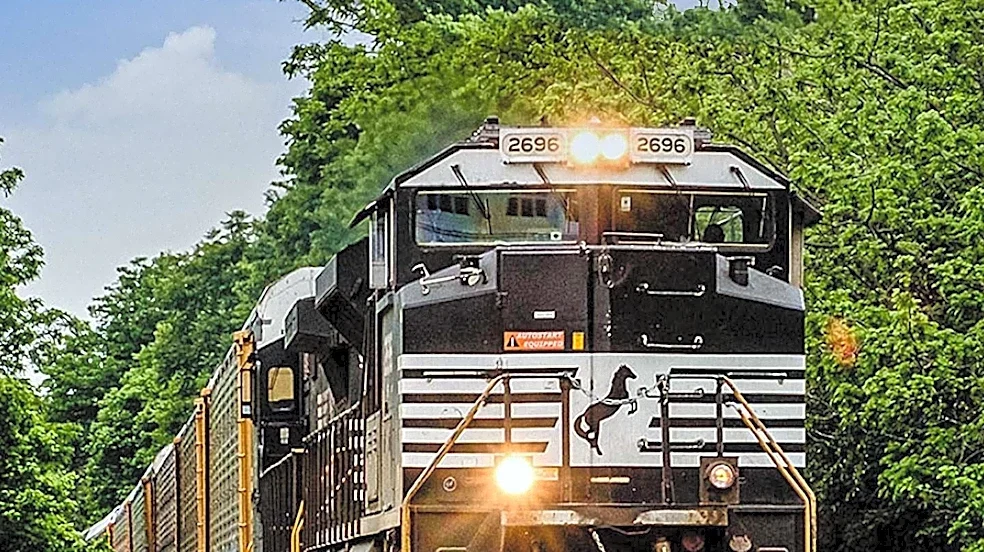
and Trussville. For decades, residents in areas like Birmingham's Harris Homes have faced significant disruptions, including being trapped in their neighborhoods for hours, due to stopped freight trains. Birmingham City Council member Darrell O’Quinn noted that such blockages occurred at least once a week for many years. The project, funded by an $8 million federal Consolidated Rail Infrastructure and Safety Improvements (CRISI) grant, $1.5 million from Norfolk Southern, and $250,000 each from Birmingham and Trussville, seeks to improve both freight movement efficiency and community access. The proposed changes include closing nine railroad crossings, building vehicle and pedestrian underpasses, extending roads, and extending a railroad siding in Trussville to allow trains to pass without blocking motorists.
Why It's Important?
This project is crucial for improving public safety, quality of life, and economic efficiency in the affected communities. Residents have long reported issues ranging from missed appointments and work delays to emergency service access problems and increased safety risks due to drivers attempting to beat trains. Birmingham Mayor Randall Woodfin highlighted the frustration of being trapped in neighborhoods and the dangers associated with blocked crossings. The initiative also addresses public health concerns, as Jason Avery, president of the Woodlawn Neighborhood Association, pointed out that train noise disrupts sleep and poses long-term health risks. By creating grade-separated routes and improving rail infrastructure, the project aims to reduce these disruptions, enhance safety for both pedestrians and motorists, and ensure more reliable travel through the communities. This collaboration also serves as a model for regional cooperation in addressing shared infrastructure challenges.
What's Next?
The immediate next step for the R.E.D.E.S.I.G.N. Alabama project involves Kimley-Horn leading the design and environmental review phase. This work is anticipated to take two to three years and will determine the final engineering plans and necessary steps before construction can commence. Following this phase, officials will assess construction costs, secure additional funding, and establish construction timelines. Birmingham City Council member Darrell O’Quinn described this as a 'generational project,' indicating that its full implementation will not be immediate. While Norfolk Southern expects a significant reduction in train stoppages, a measurable baseline for current blockage frequency will be important for evaluating the project's effectiveness post-construction. The project's success will depend on continued collaboration among federal, state, and local partners, as well as Norfolk Southern, to navigate the complex design, funding, and construction phases.
Beyond the Headlines
The R.E.D.E.S.I.G.N. Alabama project highlights the broader challenges faced by communities situated along critical freight rail corridors. The tension between economic growth driven by rail transportation and the daily lives of residents often leads to significant quality-of-life issues. This initiative underscores the importance of integrated urban planning that considers the impact of infrastructure on community connectivity, emergency response, and public health. The long-standing nature of the problem in Birmingham and Trussville—decades of advocacy from residents—also points to the slow pace at which complex infrastructure problems involving multiple stakeholders can be addressed. The project's reliance on federal grants, such as the CRISI grant from the Bipartisan Infrastructure Law, demonstrates the critical role of federal funding in catalyzing solutions for local infrastructure deficits that have regional and national economic implications. This project could set a precedent for how other U.S. cities manage similar rail-community conflicts.