




What's Happening?
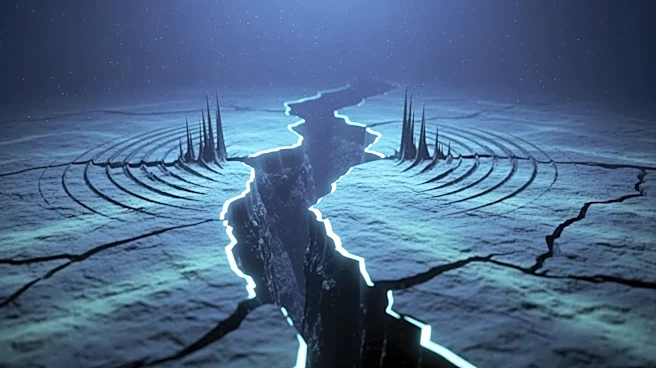
A scientific expedition has revealed that the Juan de Fuca tectonic plate is splitting apart beneath the Pacific Northwest seafloor. This discovery, published in Science Advances, provides the first clear images of a subduction zone in the process of breaking
up. The study, led by Brandon Shuck from Louisiana State University, shows that the plate is tearing apart in stages, a process known as episodic or piecewise termination. This finding settles a long-standing question about how subduction zones eventually shut down, with the plate breaking apart piece by piece rather than all at once.
Why It's Important?
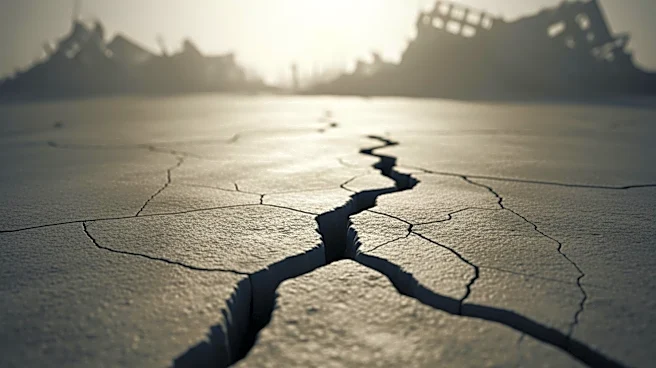
The discovery has significant implications for understanding earthquake risks in the Pacific Northwest. Subduction zones are responsible for some of the most powerful earthquakes and volcanic eruptions on the planet. The new insights into the structural changes of the Juan de Fuca plate could improve seismic hazard models and help predict future earthquake behavior in the region. This research is crucial for public safety and infrastructure planning, as it provides a clearer picture of potential seismic activity.
What's Next?
Researchers will continue to study the structural breaks in the Juan de Fuca plate to understand how they might influence earthquake behavior. The findings could lead to improved seismic hazard models, which are essential for preparing for potential earthquakes and tsunamis in the Pacific Northwest. Ongoing research will focus on whether these structural breaks could block or facilitate the spread of seismic energy during an earthquake.