
What's Happening?
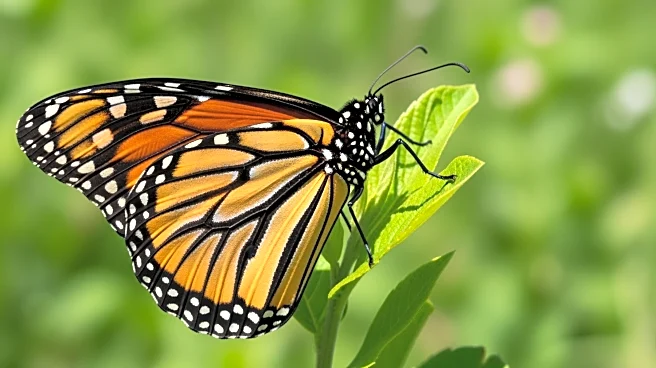
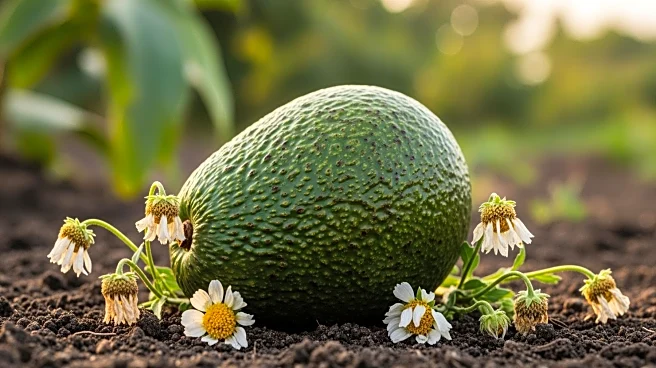
The decline of natural pollinators is posing a significant threat to crops like avocados, almonds, and blueberries, which rely heavily on pollination. Modern agriculture's dependence on honeybees is proving
insufficient as these bees cannot fully replace the diverse pollination services provided by wild species. The reduction in wild pollinators is attributed to habitat loss, pesticide use, and climate change. This decline is leading to lower crop yields and increased instability in food production, highlighting the need for a more diverse pollination strategy.
Why It's Important?
The decline in pollinators has direct implications for food security and agricultural sustainability. As pollination is crucial for crop yields and quality, the reduction in pollinator diversity could lead to higher food prices and reduced availability of certain crops. This situation underscores the importance of biodiversity in agriculture and the need for innovative solutions to support pollination. The reliance on a single pollinator species poses risks to the resilience of food systems, especially in the face of climate change.
Beyond the Headlines
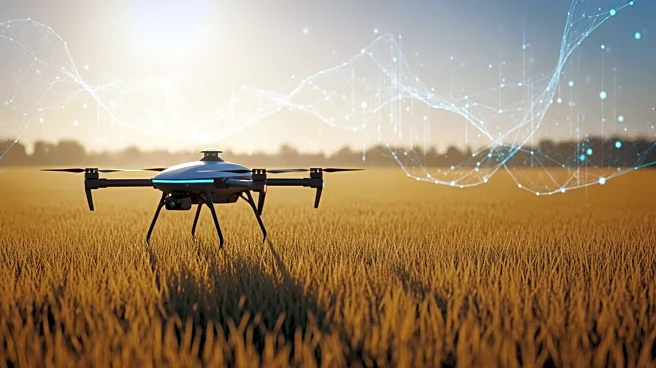
The crisis calls for a partnership between nature and technology, where biomimetic approaches can complement natural pollination. By mimicking natural pollinators, technology can enhance pollination efficiency without harming existing ecosystems. This approach could stabilize yields and ensure the continued availability of key crops, promoting a sustainable agricultural future.