




What's Happening?
The daughter of Alisa Goods, a New York City grandmother, is seeking answers regarding her mother's disappearance and subsequent death in Las Vegas. Alisa Goods, 63, was last seen on August 8 after visiting a CVS. She was reported missing two days later.
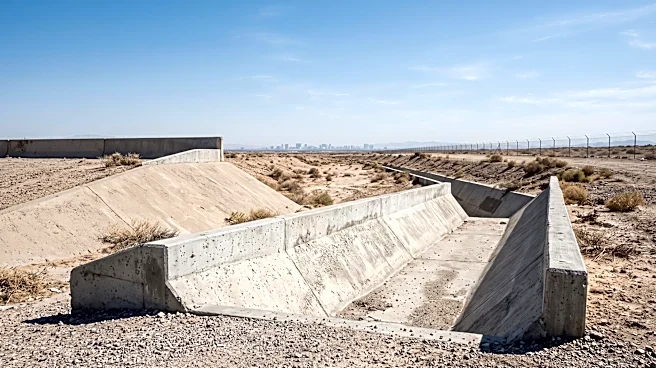
On August 20, the Metropolitan Police Department found her deceased in a drainage area near Harry Reid International Airport. Surveillance footage from the airport reportedly shows Goods falling down an embankment, getting back up, and then collapsing. Police informed Kristen Goods, the daughter, that the video depicts her mother throwing her belongings and then herself over a pony wall into the embankment, appearing 'wobbly' and 'not really stable.' The family has requested to view the surveillance footage to verify the police account but has been denied access by Metro and Clark County officials. Additionally, suspicious text messages requesting Bitcoin for gas were sent from Alisa Goods' phone four days after the surveillance footage incident, adding another layer of mystery to the case. The cause of death has not yet been determined.
Why It's Important?
This incident highlights critical issues concerning transparency in law enforcement investigations and the emotional toll on families seeking closure. The family's inability to access surveillance footage, despite police descriptions of its contents, raises questions about public access to information in ongoing investigations and the balance between privacy and accountability. The suspicious text messages sent from the deceased's phone after her reported collapse introduce a potential criminal element, suggesting possible exploitation or foul play, which could broaden the scope of the investigation beyond an accidental death. For the public, such cases underscore the importance of clear communication from authorities and the need for robust protocols for handling evidence, especially when it could provide crucial answers to grieving families. The lack of a determined cause of death further complicates the situation, leaving the family in a state of uncertainty and hindering their ability to process their grief.
What's Next?
The family of Alisa Goods will likely continue to press for access to the surveillance footage and further details regarding the investigation into her death. Their attorney may pursue legal avenues to compel the release of the video from Metro and Clark County officials. The police investigation will continue to determine the official cause of death, which is crucial for understanding the circumstances surrounding Alisa Goods' passing. Depending on the findings, the investigation could shift from a missing person and recovery case to a potential criminal inquiry, especially if the suspicious text messages are linked to any illicit activity or if the cause of death points to foul play. Public pressure and media attention could also play a role in encouraging authorities to provide more transparency and answers to the family and the public.
Beyond the Headlines
Beyond the immediate search for answers, this case touches upon broader societal implications regarding the vulnerability of individuals, particularly older adults, when traveling alone. The incident also brings to light the challenges families face when navigating complex legal and bureaucratic systems during times of grief, especially when seeking information from law enforcement. The involvement of suspicious financial requests, such as Bitcoin, points to the evolving landscape of potential exploitation and fraud, which can target individuals in vulnerable situations. This case could prompt discussions about airport security protocols, the responsibilities of local authorities in assisting families of deceased individuals, and the ethical considerations surrounding the release of sensitive surveillance footage to next of kin. It also underscores the psychological impact of unresolved questions on grieving families, emphasizing the need for compassionate and transparent investigative processes.