




What's Happening?
Israel and Lebanon have initiated their first direct peace talks in 33 years, facilitated by U.S. Secretary of State Marco Rubio in Washington, D.C. The discussions aim to address the ongoing conflict between Israel and Hezbollah, a militant group operating
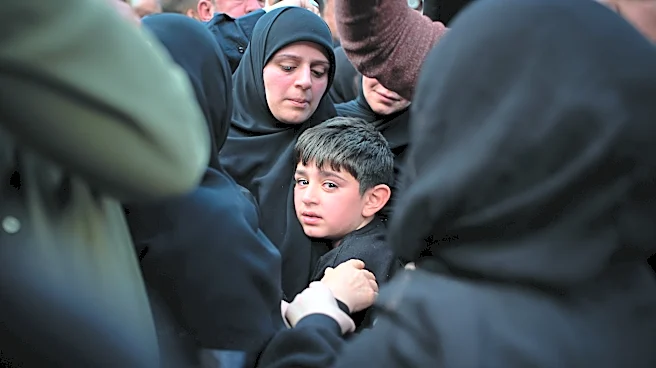
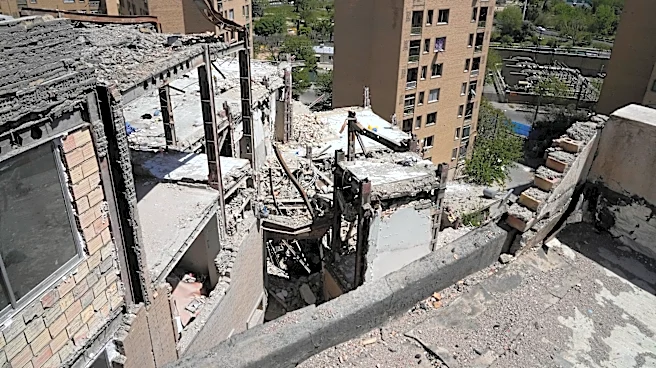
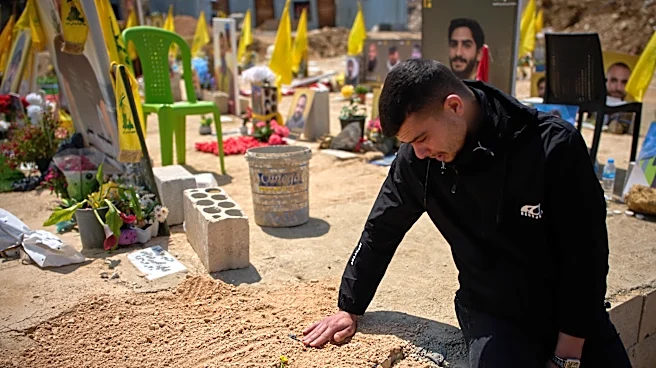
in Lebanon. Israeli Ambassador to the U.S., Yechiel Leiter, and Lebanese Ambassador to the U.S., Nada Hamadeh, participated in the talks. The primary goal is to disarm Hezbollah and reduce Iran's influence in Lebanon. Despite the historic nature of the talks, Hezbollah has already expressed its refusal to abide by any agreements made. The conflict has resulted in over 2,000 deaths in Lebanon since March 2, with ongoing exchanges of fire between the Israel Defense Forces and Hezbollah.
Why It's Important?
The peace talks between Israel and Lebanon are significant as they represent a potential shift in the longstanding conflict in the region. A successful negotiation could lead to a reduction in violence and a stabilization of the area, which has been plagued by conflict for decades. The disarmament of Hezbollah could weaken Iran's influence in Lebanon, potentially altering the geopolitical dynamics in the Middle East. For the U.S., facilitating these talks underscores its role as a mediator in international conflicts and could enhance its diplomatic standing. However, Hezbollah's rejection of the talks poses a significant challenge to achieving a lasting peace.
What's Next?
Negotiators from both Israel and Lebanon are expected to return to their respective capitals to review the discussions. While no follow-up meeting has been scheduled, there is an expectation for a second round of talks to occur in the coming weeks in Washington. The outcome of these talks could influence future diplomatic efforts and the stability of the region. Stakeholders, including the U.S., Israel, Lebanon, and Hezbollah, will likely continue to navigate the complex political landscape to find a resolution.