



What's Happening?
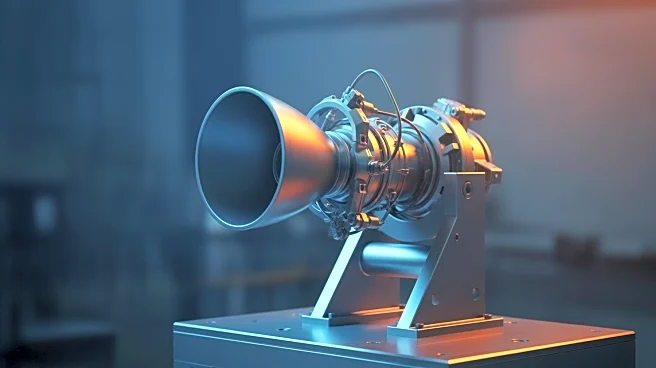
North Korean leader Kim Jong Un has overseen a test of an upgraded solid-fuel engine, which the country claims is capable of reaching the U.S. mainland. This development is part of North Korea's ongoing efforts to enhance its strategic military capabilities.
The Korean Central News Agency (KCNA) reported that the engine test, which used composite carbon fiber material, achieved a maximum thrust of 2,500 kilonewtons. This is an increase from a previous test in September, which reported a thrust of 1,970 kilonewtons. The test is part of a five-year arms build-up plan aimed at upgrading North Korea's 'strategic strike means,' a term that includes nuclear-capable ballistic missiles. Despite these claims, some experts, such as Lee Choon Geun from South Korea's Science and Technology Policy Institute, suggest that North Korea might be exaggerating its capabilities, as key details like the engine's total combustion time were not disclosed.
Why It's Important?
The test signifies North Korea's continued focus on developing more advanced and concealable missile technology, which poses a potential threat to the U.S. and its allies. Solid-fuel missiles are particularly concerning because they are easier to move and conceal compared to liquid-fuel missiles, which require fueling before launch. This development could escalate tensions in the region and complicate diplomatic efforts aimed at denuclearization. The test also highlights North Korea's strategic goal of enhancing its military arsenal, which could lead to increased military readiness and potential arms race dynamics in the region. The international community, particularly the U.S., may need to reassess its security and diplomatic strategies in response to these advancements.
What's Next?
North Korea's missile development program may face delays or require further advancements, possibly with external assistance, as suggested by some experts. The country might also be working on developing smaller intercontinental ballistic missiles (ICBMs) that can be launched from submarines or mobile launch trucks. This could involve efforts to place multiple warheads on a single missile to overcome U.S. missile defenses. The international community, including the U.S., will likely monitor these developments closely and may consider diplomatic or military responses to address the potential threat. Additionally, North Korea's actions could influence regional security policies and alliances.
Beyond the Headlines
The test underscores the ongoing challenges in achieving denuclearization on the Korean Peninsula. North Korea's pursuit of advanced missile technology reflects its strategic priorities and the complexities of international diplomacy. The potential involvement of external actors, such as Russia, in North Korea's missile program could further complicate geopolitical dynamics. The situation also raises ethical and legal questions about the proliferation of missile technology and the responsibilities of the international community in preventing the escalation of military conflicts.