



What's Happening?
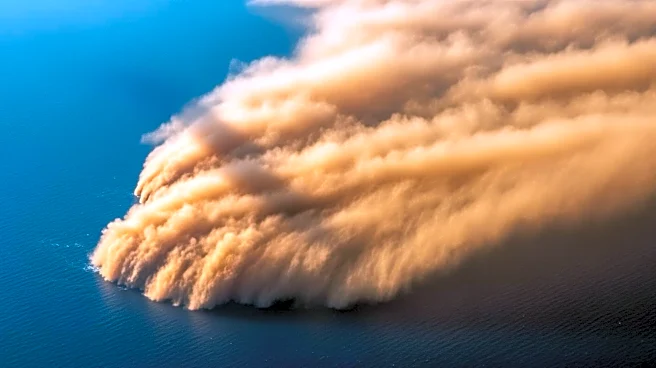
In March 2026, a significant Saharan dust storm, driven by the harmattan winds, swept across northwestern Africa, affecting visibility and air quality. The dust plume, tracked by NASA satellites, moved southwest from the Sahara Desert towards the Atlantic
Ocean, eventually reaching the Canary Islands. The Spanish meteorological agency issued alerts due to the low visibility and harsh conditions caused by the dust. The harmattan winds, which blow from the northeast between November and April, often produce such dust storms by lifting particles from the Sahara. This particular event was expected to worsen air quality and visibility across the Canary Islands through early April.
Why It's Important?
Saharan dust storms have significant environmental and health impacts, affecting air quality and visibility in affected regions. The dust can carry allergens and pathogens, posing health risks to vulnerable populations. Additionally, these storms can influence weather patterns and climate by affecting solar radiation and cloud formation. The movement of dust across continents highlights the interconnectedness of global weather systems and the need for international cooperation in monitoring and mitigating the impacts of such natural phenomena. Understanding these events is crucial for developing strategies to protect public health and manage environmental impacts.
What's Next?
As the dust storm continues to affect the Canary Islands, local authorities will likely focus on mitigating its impacts on public health and infrastructure. This may involve issuing health advisories, enhancing air quality monitoring, and implementing measures to protect vulnerable populations. Researchers will continue to study the patterns and impacts of Saharan dust storms to improve forecasting and response strategies. Long-term efforts may include international collaborations to address the broader implications of dust storms on climate and environmental health.