





What's Happening?
The United States remains a member of the World Health Organization (WHO) despite previous attempts to withdraw under President Trump's administration. The WHO's governing body, the World Health Assembly, has not formally accepted the U.S. withdrawal,
primarily due to unpaid financial obligations amounting to approximately $280 million for the 2024 and 2025 fiscal years. The WHO's constitution, established at the 1945 San Francisco Conference, does not include a withdrawal clause, making it difficult for member states to exit unilaterally. The U.S. had initiated a one-year notice for withdrawal, but the WHO has determined that the U.S. cannot complete its exit until these financial debts are settled. This decision aligns with both U.S. and international law, emphasizing the organization's commitment to global health cooperation.
Why It's Important?
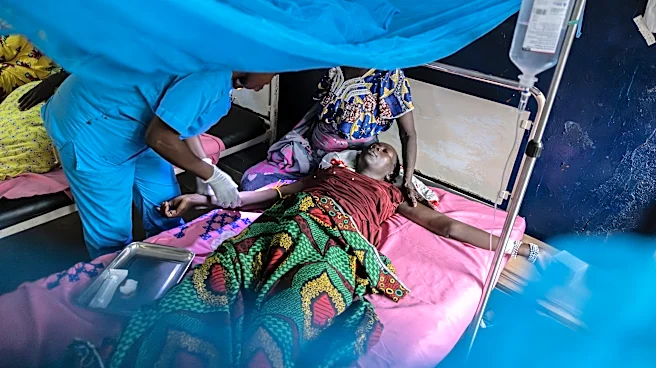
The U.S.'s continued membership in the WHO is significant for global health governance and international relations. The WHO plays a crucial role in coordinating responses to global health emergencies, such as the ongoing Ebola and hantavirus outbreaks. The U.S., as a founding member, has historically exerted significant influence within the organization. Maintaining membership allows the U.S. to participate in global health initiatives and leverage its position to shape international health policies. The financial dispute highlights the complexities of international law and the importance of fulfilling financial commitments to maintain credibility and influence in global organizations.
What's Next?
If the U.S. fails to pay its financial obligations by 2027, the WHO may invoke Article 7 of its constitution to suspend the U.S.'s voting privileges. This potential action underscores the importance of resolving the financial dispute to maintain full participation in the organization. The U.S. administration may need to negotiate with the WHO to address the outstanding dues and reaffirm its commitment to global health cooperation. The situation also presents an opportunity for the U.S. to reassess its role in international organizations and the value of multilateral engagement in addressing global challenges.