
What's Happening?
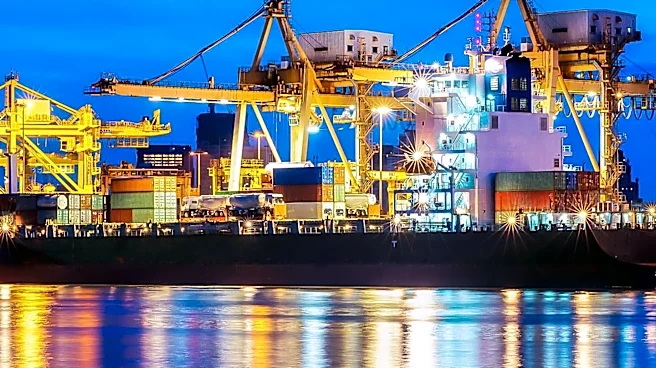
Turkon Line, a family-owned shipping company, has launched Turkey's first domestically-built LNG-fueled containership, marking a significant milestone in the country's maritime industry. The vessel, named
Kaşif Kalkavan, is the largest containership ever built in Turkey and is part of Turkon Line's expansion strategy. The ship, with a capacity of 4,400 TEU and 600 reefer slots, is the first of two vessels being constructed at the Sedef Shipyard, which is part of Turkon Holdings. The new ships are designed to operate on multiple fuel types, including LNG, marine gas oil, and various sulfur fuel oils, and are equipped with advanced emission control technologies. The Kaşif Kalkavan has embarked on its maiden voyage, serving routes to western India, Turkey, Europe, the Red Sea region, and connecting to the East Coast of the United States.
Why It's Important?
The launch of the Kaşif Kalkavan represents a significant advancement in Turkey's shipbuilding capabilities and its commitment to sustainable maritime practices. By utilizing LNG and other low-sulfur fuels, the ship aligns with global efforts to reduce maritime emissions, contributing to environmental sustainability. For Turkon Line, the new vessels increase its capacity by 50%, enhancing its competitive edge in the shipping industry. This expansion is particularly strategic as the company strengthens its service routes to India, a rapidly growing market. The development also underscores Turkey's growing role in the global shipping industry, potentially attracting more investment and fostering economic growth in the region.
What's Next?
As the Kaşif Kalkavan begins its operations, Turkon Line is expected to continue its expansion strategy, with the second vessel anticipated to join the fleet soon. The company will likely focus on optimizing its new routes and leveraging the increased capacity to capture more market share. Stakeholders in the maritime industry will be watching closely to see how these developments impact shipping dynamics, particularly in the competitive routes to India and the United States. Additionally, the success of these vessels could encourage further investment in Turkey's shipbuilding sector, promoting technological advancements and job creation.