








What's Happening?
Dallas-Fort Worth International Airport (DFW) has opened nine new gates as part of a $3 billion reconstruction of Terminal C, which is exclusively used by American Airlines. This development marks the first completed component of the terminal's rebuild,
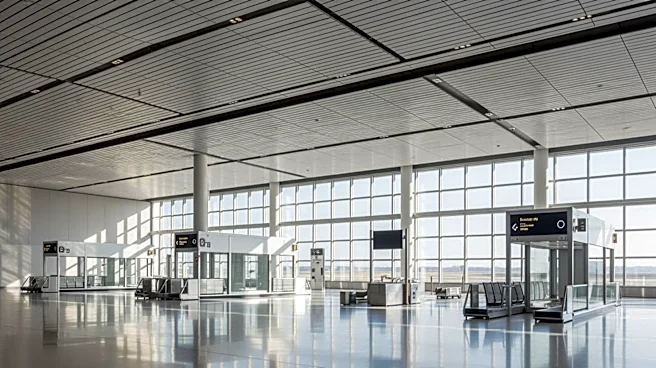
which began in 2024 and is expected to be fully completed by 2030. The new pier, which opened on June 8, includes four all-new gates and five reconstructed ones, utilizing modular technology to minimize operational disruptions and expedite construction. The pier spans 115,000 square feet and features electronic boarding gates, upgraded customer amenities, expanded seating areas, and new concessions. American Airlines is currently operating around 200 mainline departures daily from Terminal C during the 2026 summer season.
Why It's Important?
The expansion of Terminal C at DFW is significant for both the airport and American Airlines. As the busiest terminal at DFW, the enhancements are expected to improve passenger experience and operational efficiency. The use of modular construction technology highlights a trend towards innovative building methods in the aviation industry, potentially setting a precedent for future airport expansions. For American Airlines, the expansion supports its operational capacity, allowing it to maintain a high volume of departures and potentially increase its market share. The project is part of a broader expansion plan at DFW, which includes the construction of a new Terminal F, further solidifying the airport's status as a major hub in the U.S.
What's Next?
DFW's expansion plans continue with the construction of Terminal F, which is scheduled to open initially with 15 gates in 2027 and will eventually have 31 gates. This terminal, also to be used by American Airlines, comes with a $4 billion price tag. The ongoing developments at DFW are likely to attract more airlines and increase passenger traffic, contributing to the airport's growth and economic impact on the region. Stakeholders, including airlines and passengers, will be closely monitoring the progress of these projects and their implications for travel efficiency and convenience.