






What's Happening?
Belarus is significantly expanding its cooperation with Russia's state nuclear energy corporation, Rosatom. This ongoing collaboration was highlighted by Aleksandr Turchin, who noted the positive dynamics in all areas of cooperation between Belarus and Russia,
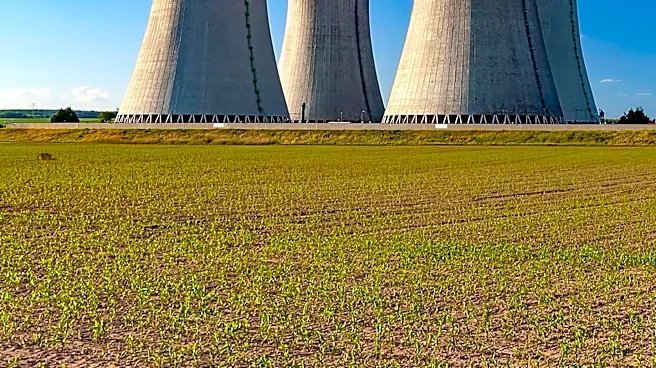
as recently affirmed by the presidents of both countries. The primary focus of this expanded partnership remains the energy sector, particularly concerning the Belarusian NPP, which is described as a significant achievement for Belarus in nuclear power engineering. Beyond nuclear energy, the cooperation is extending into various non-nuclear areas. These include additive technologies, electric mobility, energy storage, and nuclear medicine. Alexey Likhachev of Rosatom confirmed that coordinated work is progressing on the two existing units of the Belarusian NPP and that plans for further expansion are underway. Both parties expressed enthusiasm for exploring new topics and ideas to deepen their collaboration, including humanitarian matters.
Why It's Important?
The deepening cooperation between Belarus and Russia's Rosatom carries significant implications for regional energy security and technological development. For Belarus, this partnership reinforces its position as a nuclear power-generating nation, enhancing its energy independence and potentially reducing reliance on other energy sources. The expansion into non-nuclear sectors like electric mobility and additive technologies could stimulate technological advancement and economic diversification within Belarus. For Russia, it strengthens its strategic influence in Belarus and provides a market for its advanced nuclear and technological expertise. This collaboration also highlights a broader trend of increasing integration between the two countries, which could have geopolitical ramifications in Eastern Europe. The U.S. and its allies often monitor such partnerships for their potential impact on regional stability and energy markets, as increased reliance on Russian technology and energy infrastructure can be viewed as a strategic concern.
What's Next?
The expanded cooperation is expected to lead to further joint projects and initiatives in both nuclear and non-nuclear fields. Rosatom and Belarusian ministries will continue to implement prepared plans, with potential for new agreements in areas like advanced manufacturing and healthcare technology. There will likely be ongoing discussions to identify and develop new areas of collaboration, as both sides have expressed interest in broadening the scope of their partnership. The operational efficiency and safety of the Belarusian NPP will remain a key focus, with continuous efforts to optimize its performance. The success of these joint ventures could serve as a model for future bilateral cooperation between Belarus and Russia, potentially leading to deeper economic and technological integration between the two nations. International observers will continue to monitor the progress and implications of this expanding alliance.
Beyond the Headlines
The collaboration between Belarus and Rosatom extends beyond immediate economic and energy benefits, touching upon deeper geopolitical and technological implications. This partnership signifies Belarus's commitment to a long-term strategic alignment with Russia, particularly in critical infrastructure and advanced technology sectors. It also underscores Russia's strategy of leveraging its technological prowess, especially in nuclear energy, to strengthen alliances and project influence. From a technological standpoint, the transfer and development of advanced technologies in areas like additive manufacturing and nuclear medicine could foster significant innovation within Belarus, potentially creating new industries and skilled jobs. However, it also raises questions about technological dependence and the potential for dual-use technologies. Ethically, the expansion of nuclear energy cooperation always brings considerations of safety, waste management, and non-proliferation, which will be under international scrutiny. This deepening relationship could also influence regional power dynamics and international relations in the long run.