
What's Happening?
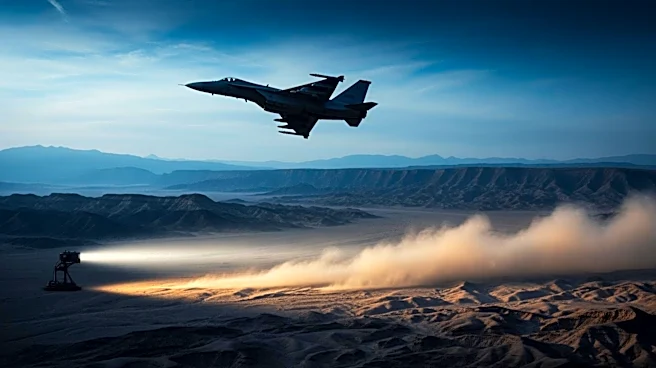
The U.S. Central Intelligence Agency (CIA) successfully executed a deception campaign to rescue a U.S. airman stranded in Iran after his F-15 fighter jet was shot down by Iranian forces. The airman, whose identity remains undisclosed, was rescued after being
stranded for 36 hours in mountainous terrain. The CIA's strategy involved spreading misinformation within Iran, suggesting that U.S. forces had already located the airman, thereby confusing Iranian search efforts. This allowed U.S. special forces to conduct a complex extraction mission, involving hundreds of troops and multiple aircraft. The operation faced challenges, including a firefight with Iranian forces and the immobilization of two MC-130J planes, which were subsequently destroyed to prevent capture.
Why It's Important?
This operation highlights the strategic capabilities and intelligence prowess of the U.S. in conducting high-risk rescue missions. The successful extraction of the airman demonstrates the effectiveness of misinformation as a tactical tool in military operations. The incident also underscores the ongoing tensions between the U.S. and Iran, with potential implications for future military engagements and diplomatic relations. The use of advanced military technology and special operations forces reflects the U.S.'s commitment to protecting its personnel and interests abroad. This event may influence U.S. military strategies and policies regarding operations in hostile territories.
What's Next?
The successful rescue may lead to increased confidence in U.S. military operations and intelligence strategies. However, it could also provoke retaliatory actions from Iran, potentially escalating tensions further. The U.S. may need to engage in diplomatic efforts to mitigate any fallout from the operation. Additionally, the incident could prompt discussions on the ethical implications of using deception in military operations, as well as the potential risks to international peace and security.