





What's Happening?
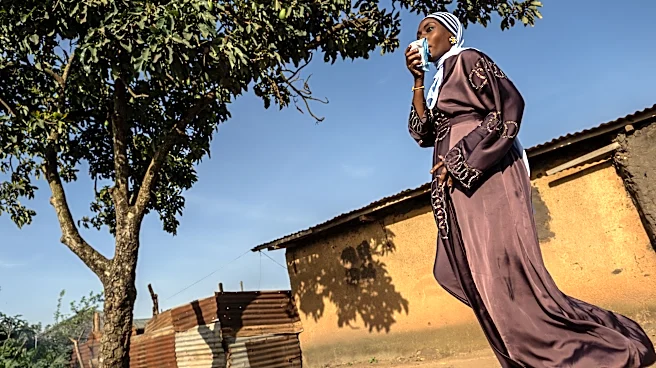
The World Health Organization (WHO) Director-General, Tedros Adhanom Ghebreyesus, has arrived in Kinshasa, Congo, to support efforts against a rare Ebola virus outbreak. The outbreak has resulted in 906 suspected cases and 223 suspected deaths. The WHO is
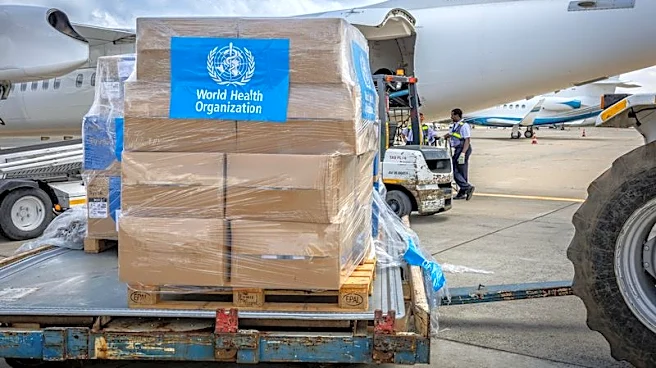
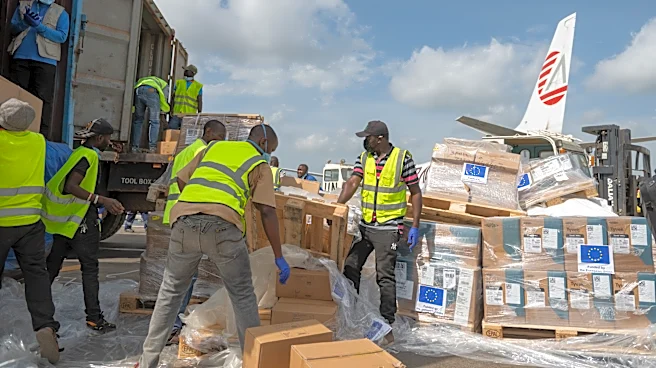
facing challenges such as a lack of equipment, distrust among the population, and armed groups in the region. The outbreak, which began spreading before being identified in mid-May, is complicated by regional armed conflict and food insecurity. Despite these challenges, the WHO remains optimistic about containing the outbreak, with some patients showing signs of recovery. The United States has pledged $80 million in aid, and the European Union has sent medical supplies to the affected areas.
Why It's Important?
The Ebola outbreak in Congo poses significant public health challenges, with potential implications for regional stability and international health security. The involvement of armed groups and the distrust of medical protocols complicate containment efforts. The outbreak's spread could strain global health resources and necessitate increased international cooperation. The U.S. and EU's financial and material support highlight the global community's role in addressing such health crises. Successful containment could prevent further spread and reduce the risk of international transmission, underscoring the importance of coordinated global health responses.
What's Next?
The WHO and international partners will continue to monitor the situation closely, with efforts focused on improving local health infrastructure and community engagement. The U.S. and EU's continued support will be crucial in providing necessary resources and expertise. The WHO's call against travel bans suggests a focus on managing the outbreak through local containment rather than international isolation. The situation remains fluid, with potential for further international aid and policy adjustments as the outbreak evolves.