






What's Happening?
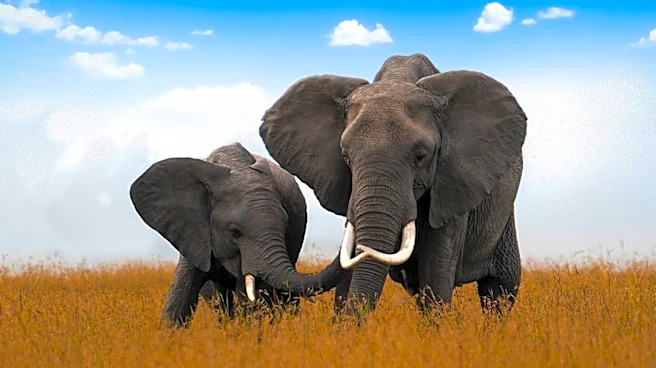
The Kenya Wildlife Service (KWS) is investigating the deaths of 15 elephants in Amboseli National Park over the past month. Preliminary findings suggest a potential toxic substance may be involved, as 10 of the elephants exhibited signs of partial paralysis
before dying within two days. The remaining five carcasses were too decomposed to determine the cause of death. The affected elephants were primarily adult females and their calves. Samples have been sent to the University of Nairobi and other laboratories for further analysis. Environmental investigations are also underway to identify possible sources of contamination.
Why It's Important?
The deaths of these elephants highlight potential environmental hazards that could affect wildlife in Kenya's national parks. As elephants are a key attraction for tourism, which is a significant part of Kenya's economy, any threat to their population could have economic repercussions. Additionally, the incident raises concerns about environmental safety and the impact of human activities on wildlife. The investigation's findings could lead to policy changes or increased conservation efforts to protect these animals and their habitats.
What's Next?
Further tests are being conducted to confirm the presence and concentration of the toxic substance. KWS is also conducting environmental assessments, including water source analysis, to determine if the elephants were exposed to a common contaminant. The results of these investigations will guide future actions to prevent similar incidents. Increased surveillance and monitoring of elephant populations in the Amboseli Ecosystem are expected as part of ongoing conservation efforts.