




What's Happening?
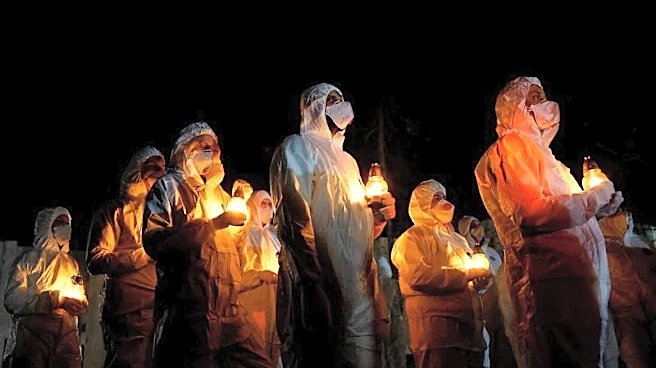
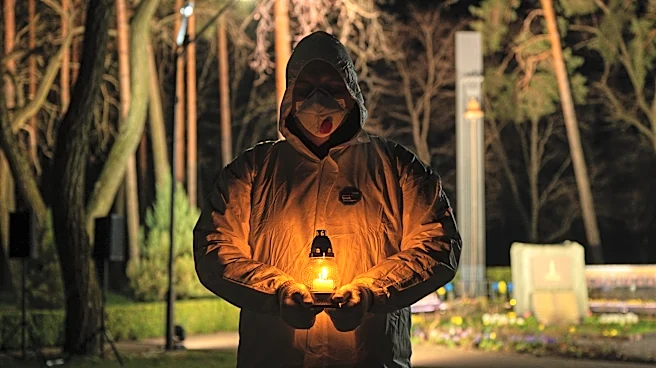
As Ukraine marks the 40th anniversary of the Chernobyl nuclear disaster, recent events have reignited concerns about nuclear safety. A Russian drone attack in 2025 damaged the New Safe Confinement (NSC) structure at Chernobyl, which was designed to contain
the remnants of the 1986 disaster. Although the attack did not result in a radiation leak, it highlighted the vulnerability of nuclear sites in conflict zones. The NSC, completed in 2019, was intended to last 100 years, but the damage may shorten its lifespan and delay critical dismantling of the underlying sarcophagus. The incident underscores the broader risks posed by Russia's invasion of Ukraine, which has made once-unthinkable nuclear threats a reality. The war has disrupted assumptions about nuclear safety, with potential long-term implications for the region and beyond.
Why It's Important?
The damage to Chernobyl's protective structures poses significant risks to nuclear safety, with potential consequences for public health and environmental stability. The incident highlights the dangers of military actions near nuclear facilities and the need for robust safety measures. The war in Ukraine has forced the country to rely heavily on its nuclear power plants, increasing the stakes for maintaining their safety and security. The situation may prompt a reevaluation of nuclear energy policies and safety protocols, influencing future energy strategies and international cooperation. The ongoing conflict and its impact on nuclear safety could have far-reaching effects on European security and environmental stability.
What's Next?
Urgent repairs to the NSC and other nuclear facilities in Ukraine are necessary to prevent further damage and potential disasters. The international community may need to increase support for Ukraine's nuclear safety measures and infrastructure repairs. Diplomatic efforts to de-escalate the conflict and protect nuclear sites are essential to mitigate risks. The situation may prompt a reevaluation of nuclear energy policies and safety protocols globally, influencing future energy strategies and international cooperation on nuclear safety. Continued monitoring and assessment by international agencies will be crucial in managing the risks associated with the conflict.