







What's Happening?
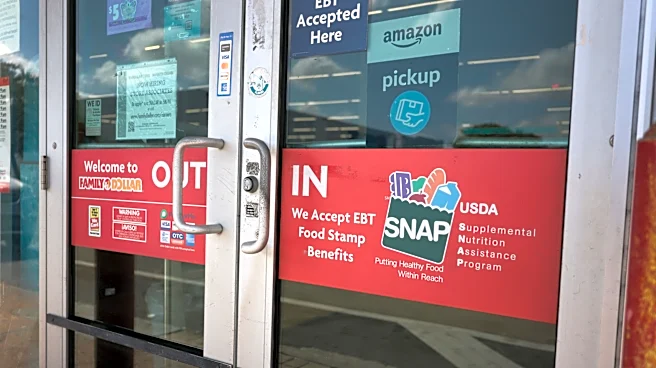
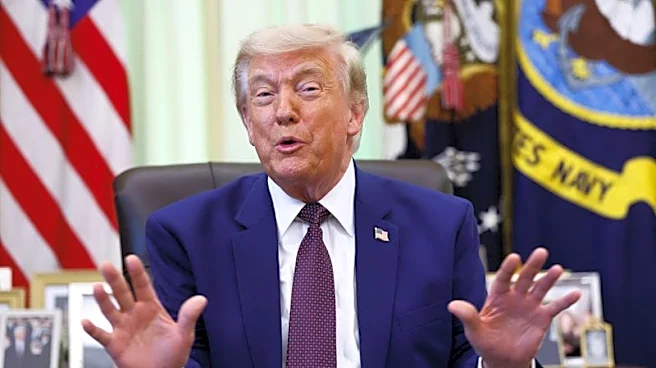
A federal judge has issued a preliminary injunction against the Trump administration, preventing the enforcement of new conditions on state funding for food stamps and school lunches. Judge Myong J. Joun of the US District Court for the District of Massachusetts
granted the injunction following a lawsuit filed by a coalition of 20 states. The states argued that the conditions imposed by the US Department of Agriculture, which included provisions related to anti-discrimination, gender ideology, and immigration, were vague and ideologically driven. The lawsuit contends that these conditions could jeopardize funding for essential safety-net programs such as the Emergency Food Assistance Program and the Special Supplemental Nutrition Program for Women, Infants, and Children (WIC).
Why It's Important?
The injunction represents a significant legal challenge to the Trump administration's efforts to impose new conditions on federal funding for state-administered programs. The outcome of this case could have far-reaching implications for how federal funds are allocated and the extent to which the federal government can impose ideological conditions on states. Programs like WIC and school lunches are critical for low-income families, and any disruption in funding could have severe consequences for vulnerable populations. The case also highlights ongoing tensions between state and federal governments over the administration of social welfare programs.
What's Next?
The court's decision to issue a preliminary injunction suggests that the legal battle over these funding conditions is far from over. Judge Joun has indicated that a memorandum of decision will be issued later, which could provide further legal reasoning and set the stage for future court proceedings. The Trump administration may choose to appeal the injunction, potentially escalating the case to higher courts. Meanwhile, states will likely continue to challenge federal conditions that they perceive as overreaching or ideologically motivated. The outcome of this case could influence future federal-state relations and the administration of social welfare programs.