





What's Happening?
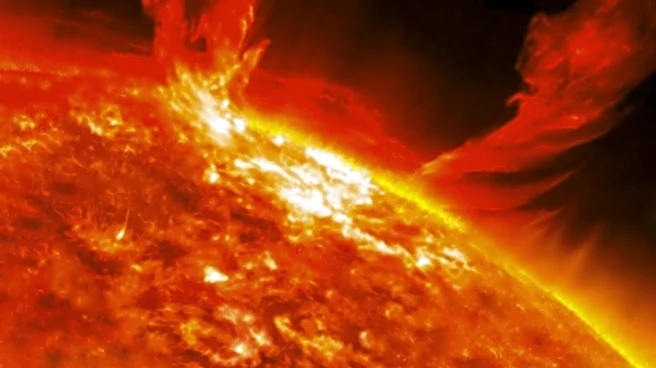
NASA scientists have successfully utilized a new solar flare alert system to coordinate the launch of sounding rockets, enabling the first-ever study of solar flares in progress. This system, described in a paper published in The Astrophysical Journal,
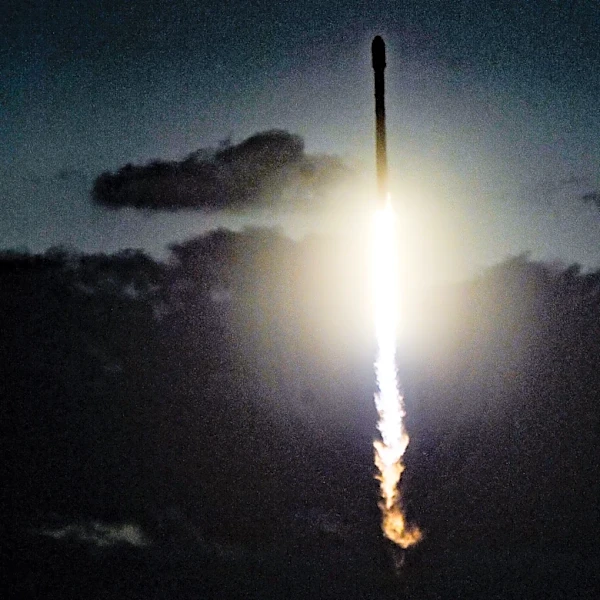
pinpoints a flare's location and predicts its duration within minutes of detection by spacecraft. This capability addresses a long-standing challenge in solar research, as sounding rockets have a limited observation window of approximately five minutes, and flares can dissipate just as quickly. The enhanced alert system was first used in April 2024 to launch two rockets from Alaska, successfully observing a solar flare. In May 2026, an improved version of the system facilitated the launch of another rocket, which observed three solar flares. The system analyzes X-ray and ultraviolet emissions from active regions on the Sun, using data from NASA’s Solar Dynamics Observatory, NOAA’s GOES satellites, and ground-based observatories.
Why It's Important?
Solar flares are powerful bursts of radiation that accelerate particles and release significant energy into the solar system, impacting Earth and its technologies. Studying these events in real-time is crucial for understanding space weather phenomena, which can disrupt satellite communications, power grids, and pose risks to astronauts. Sounding rockets offer a cost-effective and rapid method for observing light from flares that is typically absorbed by Earth's atmosphere. The new alert system significantly improves the efficiency and success rate of these missions by ensuring rockets are launched when a flare is active and observable. This precision allows scientists to gather invaluable data on the dynamics and characteristics of solar flares, contributing to better space weather forecasting and mitigation strategies, ultimately protecting critical infrastructure and human spaceflight endeavors.
What's Next?
The team is continuously refining the solar flare alert system under a NASA Early Career Investigator Program grant. Further improvements will enhance its accuracy and predictive capabilities. This advanced early warning system is expected to support future rocket campaigns, optimize the operations of solar observatories, and contribute to more accurate space weather forecasting. The ability to precisely time observations of transient solar events will enable more comprehensive studies of solar physics and its effects on the near-Earth environment. As solar activity fluctuates, this system will become an increasingly vital tool for researchers to capture and analyze these dynamic phenomena, leading to a deeper understanding of our star and its influence on our planet.
Beyond the Headlines
This technological advancement represents a significant leap in our ability to conduct opportunistic science, particularly for transient astronomical events. The development of a predictive alert system for solar flares showcases how real-time data analysis and rapid response capabilities can revolutionize scientific research. Beyond solar physics, this approach could inspire similar systems for studying other unpredictable phenomena, such as supernovae, gamma-ray bursts, or even terrestrial events like volcanic eruptions. The integration of data from multiple space-based and ground-based observatories highlights the power of collaborative data streams in enhancing scientific understanding. Furthermore, the practical implications for space weather forecasting underscore the direct societal benefits of fundamental research into solar activity, protecting our increasingly technology-dependent world from potential disruptions.