








What's Happening?
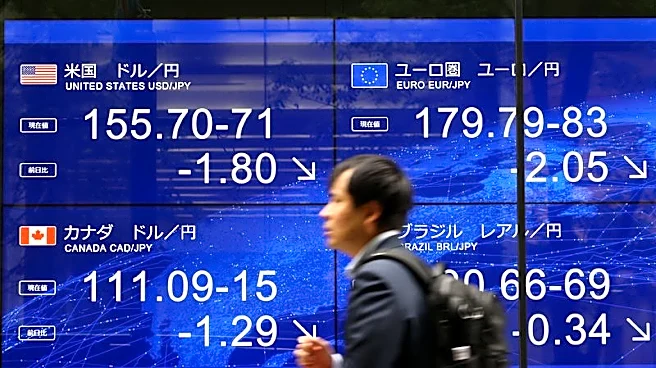
The Japanese yen has weakened significantly, erasing half of the gains it made following recent intervention efforts by the U.S. and Japanese authorities. The currency fell by 1% to ¥159.29 per dollar, marking the worst performance among the Group-of-10
currencies on Monday. This decline has raised concerns among traders who are now on alert for potential further interventions. According to Lee Ferridge, a strategist at State Street, the market is disappointed by the lack of additional intervention, suggesting that without further action, the yen may continue to weaken.
Why It's Important?
The weakening of the yen has significant implications for both the Japanese and U.S. economies. For Japan, a weaker yen can increase the cost of imports, leading to higher inflation and affecting consumer purchasing power. It can also impact Japanese companies that rely on imported goods and materials. For the U.S., the yen's weakness could affect trade balances and complicate monetary policy decisions. The situation highlights the challenges faced by central banks in managing currency stability amid global economic uncertainties.
What's Next?
Traders and financial markets will be closely monitoring any signals from the Japanese and U.S. authorities regarding potential further interventions. The situation may prompt discussions among policymakers about the need for coordinated action to stabilize the yen. Additionally, the ongoing currency fluctuations could influence future monetary policy decisions in both countries, as they seek to balance domestic economic goals with international financial stability.