

What's Happening?
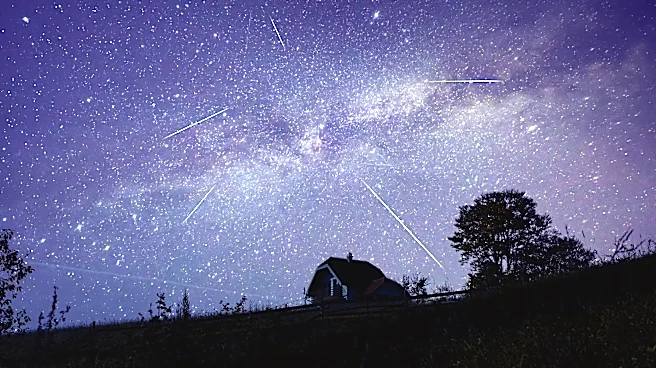
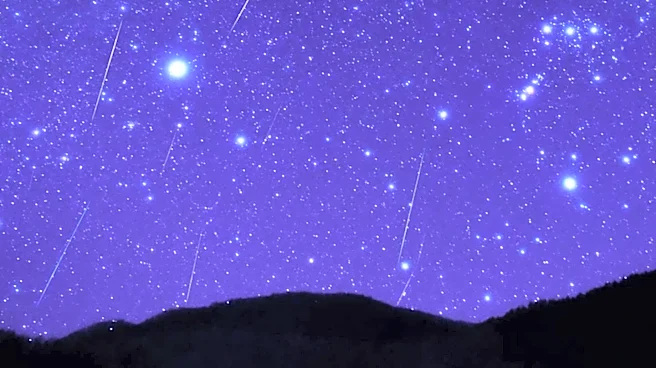
The Leonid meteor shower is set to peak on the night of November 17-18, 2026, providing an opportunity for stargazers to witness shooting stars and fireballs. This annual celestial event occurs as Earth passes through a stream of debris left by Comet
55P/Tempel-Tuttle. According to the International Meteor Organisation, up to 15 meteors per hour could be visible under ideal dark sky conditions. However, NASA offers a more conservative estimate of fewer than three meteors per hour. The best time for viewing will be in the hours before dawn on November 18, when the radiant point of the shower, located in the constellation Leo, will be highest in the southeastern sky. The waxing moon will have set by then, ensuring darker skies and better visibility for fainter meteors. Both Jupiter and Mars will be in close proximity within the constellation Leo, making it easier to locate the radiant.
Why It's Important?
The Leonid meteor shower is significant for astronomy enthusiasts and the general public as it offers a spectacular natural phenomenon that connects humanity to the broader cosmos. Unlike many astronomical events that require specialized equipment, meteor showers are accessible to anyone with a clear view of the night sky. The Leonids are particularly noted for their potential to produce dazzling fireballs and long-lasting Earth-grazing meteors, which create impressive trails. Historically, the Leonids have been known to generate magnificent meteor storms, though such events are rarer. This annual display serves as a reminder of the dynamic nature of our solar system and the continuous interaction between Earth and cosmic debris. It also provides an educational opportunity to learn about comets and meteoroids.
What's Next?
Stargazers are encouraged to prepare for optimal viewing on the night of November 17-18, particularly in the hours before dawn on November 18. Finding a location away from light pollution and allowing eyes 20-30 minutes to adapt to the dark will enhance the viewing experience. While a major meteor storm is not anticipated this year, the shower is still expected to deliver a notable display. Future Leonid meteor storms are predicted by the Planetary Society as early as 2031, with a study from August 2026 suggesting potentially spectacular displays in 2033 and 2034. These predictions will keep astronomers and the public anticipating future celestial events, fostering ongoing interest in space observation and research.
Beyond the Headlines
Beyond the visual spectacle, the Leonid meteor shower holds deeper scientific and cultural significance. The study of meteor showers provides valuable data about the composition and trajectory of comets, offering insights into the early solar system. Culturally, meteor showers have inspired awe and wonder throughout history, influencing myths, legends, and artistic expressions across various civilizations. The anticipation of future meteor storms, particularly in 2031, 2033, and 2034, highlights the cyclical nature of cosmic events and humanity's ongoing quest to understand and predict them. This continuous engagement with celestial phenomena fosters a sense of connection to the universe and encourages scientific curiosity, inspiring future generations of astronomers and space explorers.