




What's Happening?
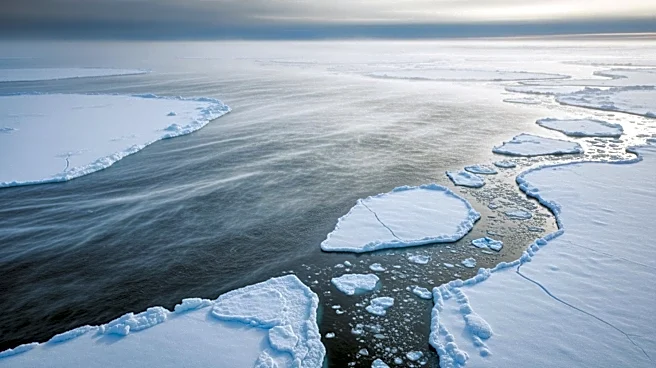
A new study led by University of Maryland scientist Madeleine Youngs has identified a feedback loop that accelerates ice loss in Antarctica. The research, published in Nature Geoscience, highlights how melting ice alters ocean circulation, which in turn
increases ice melt. This self-reinforcing cycle could significantly contribute to rising sea levels, beyond current projections. The study emphasizes the need to incorporate these feedback mechanisms into climate models to better predict future sea level rise. The findings suggest that regions like the Weddell Sea are particularly vulnerable, while others may experience temporary protection due to complex interactions.
Why It's Important?
The discovery of this feedback loop is crucial for understanding the dynamics of Antarctic ice melt and its implications for global sea levels. As ice melts, it not only raises sea levels but also changes ocean currents, leading to further melting. This could exacerbate the impact of climate change, threatening coastal communities worldwide. The study calls for a reevaluation of current climate models, which often overlook these interactions. Accurate predictions are essential for policymakers to develop effective strategies to mitigate the effects of sea level rise and protect vulnerable populations.
What's Next?
Researchers plan to conduct higher-resolution simulations to trace the future trajectories of ice melt and identify regions at greatest risk. This will involve studying the feedback processes in different parts of Antarctica to understand their impact on global sea levels. The findings could inform international climate policy and adaptation strategies. As the scientific community continues to explore these dynamics, there may be increased pressure on governments to take more aggressive action to curb emissions and invest in coastal defenses.