

What's Happening?
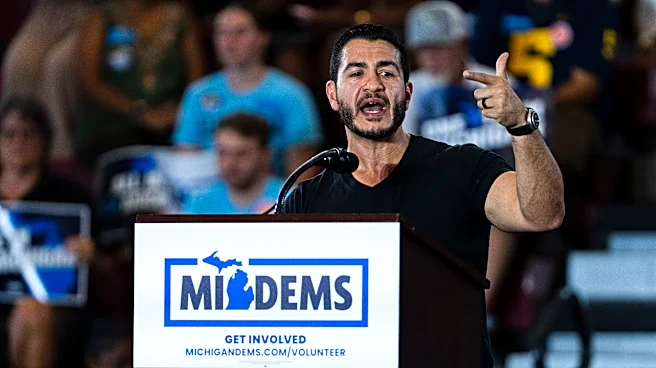
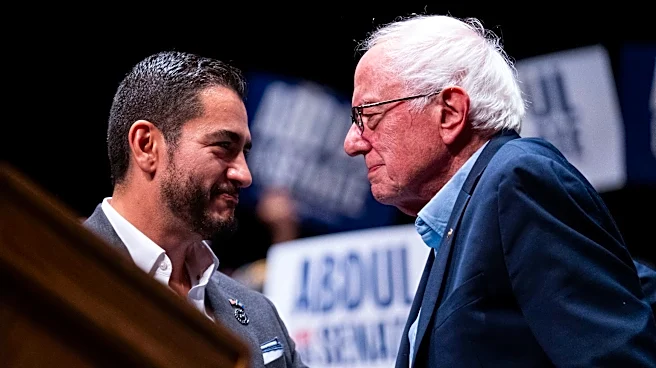
Tucker Carlson, a prominent conservative commentator, has publicly defended Michigan Democratic Senate nominee Abdul El-Sayed against conservative criticism regarding El-Sayed's past comments about the September 11 terror attacks and their aftermath.
The controversy arose after the New York Post highlighted remarks made by El-Sayed in a September 7, 2021, podcast episode of 'America Dissected,' where he stated, '9/11 scarred our country in profound ways, but what we did after 9/11 scarred millions of other people.' The publication also referenced a now-deleted tweet from El-Sayed on the 20th anniversary of 9/11, mourning the lives lost in the attacks and contrasting it with the '~1M lives, millions of injuries, & infrastructural devastation in 3 countries, perpetrated ignorantly in the name of my country.' Carlson, in his Friday newsletter, asserted that El-Sayed's assessment of the U.S. response was 'obviously right,' criticizing the U.S. war in Iraq post-9/11 as having led to hundreds of thousands of deaths and the rise of ISIS, despite Iraq not being involved in the 9/11 attacks. He also challenged El-Sayed's Republican opponent, Mike Rogers, who called El-Sayed 'unfit to serve in public office' for his views.
Why It's Important?
This unexpected defense by Tucker Carlson of a Democratic Senate nominee against conservative outrage highlights a significant ideological fracture within the American political landscape, particularly on issues related to foreign policy and historical interpretations of U.S. actions. Carlson's stance, which deviates from typical conservative narratives, could influence public discourse and potentially reshape alliances or criticisms in future political debates. For Michigan's Senate race, Carlson's intervention could complicate the Republican strategy against El-Sayed, as it undermines a key line of attack from his opponent, Mike Rogers. It also signals a potential shift in how certain conservative voices are willing to engage with and even validate perspectives traditionally associated with the left, especially concerning critiques of U.S. military interventions. This development could force both Democratic and Republican campaigns to recalibrate their messaging, as traditional partisan lines are blurred by unexpected endorsements or defenses.
What's Next?
The Michigan Senate race is likely to see continued debate over El-Sayed's past remarks and Carlson's defense. Republican challenger Mike Rogers will need to decide whether to double down on his criticism of El-Sayed or adjust his strategy in light of Carlson's unexpected support. El-Sayed's campaign may leverage Carlson's comments to portray him as a figure capable of transcending partisan divides or to validate his critical stance on U.S. foreign policy. This situation could also prompt further discussion among conservative media figures and politicians about the appropriate historical narrative surrounding 9/11 and the subsequent War on Terror, potentially leading to more nuanced or divided opinions within the conservative movement. The broader implications for U.S. foreign policy debates could include increased scrutiny of military interventions and a re-evaluation of their long-term consequences, as such discussions gain traction across different political spectrums.
Beyond the Headlines
This event underscores a deeper trend of evolving political alignments and the increasing complexity of ideological positions in the U.S. Carlson's defense of El-Sayed, despite their differing political affiliations, suggests that certain issues, particularly those involving critiques of government power and foreign policy, can create unexpected common ground across the political spectrum. It challenges the conventional understanding of 'conservative' and 'liberal' viewpoints, indicating a potential for new coalitions based on shared skepticism of establishment narratives. This could lead to a re-evaluation of what constitutes mainstream political thought and how public figures are perceived, moving beyond simple partisan labels. The incident also highlights the enduring impact of historical events like 9/11 on contemporary political discourse and the ongoing struggle to reconcile national trauma with critical self-assessment of national actions.