
What's Happening?
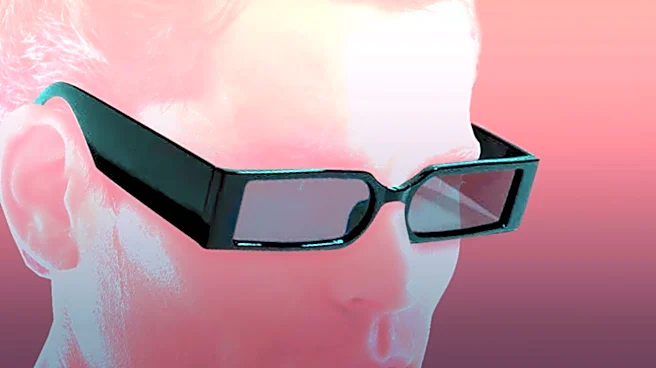
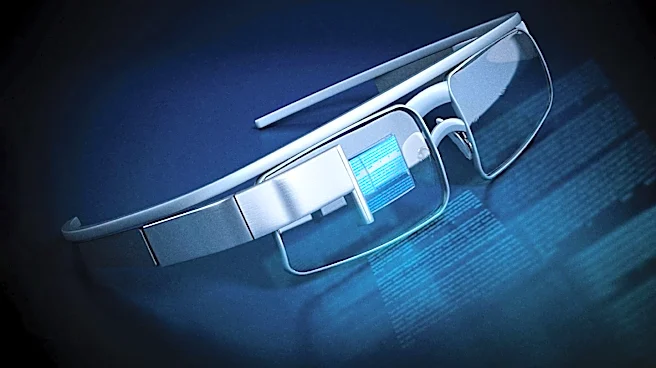
RayNeo has introduced two new lines of augmented reality (AR) smart glasses: the minimalist iO Smart Glasses and the maximalist GT Series. The iO Smart Glasses are designed for all-day wear, featuring
a small monochrome green display, intelligent voice capture, and AI features for real-time translations and productivity. These glasses weigh 33 grams and lack speakers, but include a quad-microphone array and a bone conduction sensor for clear voice transcription in noisy environments. The GT Series, comprising the GT and GT Max models, are display glasses intended for immersive media consumption, gaming, and virtual workspace applications. These models are heavier, at 68 and 78 grams respectively, and offer larger virtual screen projections (up to 231 inches for the GT and 307 inches for the GT Max) with wider fields of view. They also feature a quad-speaker setup co-tuned by Bang and Olufsen and a 3DoF AR chip for anchoring screens in 3D space.
Why It's Important?
This dual-pronged approach by RayNeo highlights the evolving landscape of AR technology, catering to both subtle, everyday utility and high-fidelity immersive experiences. The iO Smart Glasses represent a step towards integrating AR seamlessly into daily life, offering practical features like real-time translation and AI-driven productivity tools in a discreet form factor. This could significantly enhance communication and efficiency for professionals and travelers. Conversely, the GT Series pushes the boundaries of AR for entertainment and productivity, providing large virtual displays that could revolutionize how users consume media, play games, and interact with digital content, potentially reducing the need for physical screens. The focus on advanced audio and spatial computing in the GT Series indicates a move towards more engaging and interactive AR environments, impacting industries from gaming to remote work.
What's Next?
RayNeo plans to officially launch these new smart glasses on September 4th, with pricing details expected to be announced prior to the retail release. The company will also showcase the devices at IFA in early September. Following the launch, the market will observe user adoption and feedback, particularly regarding the trade-offs made for the minimalist design of the iO Smart Glasses (e.g., monochrome display, no speakers) versus the immersive capabilities of the GT Series. The performance of the AI features, such as real-time translation and the Ambient AI Productivity Suite, will be crucial for the iO's success. For the GT Series, the quality of the 'cinema-grade' display and the effectiveness of the 3DoF AR chip in anchoring virtual screens will be key differentiators. Future developments may include integrating more features into a single, versatile AR device as technology advances.
Beyond the Headlines
The introduction of these diverse AR glasses raises deeper questions about the future of human-computer interaction and the integration of technology into personal space. The iO Smart Glasses, with their constant recording capabilities for AI productivity, bring to the forefront ethical concerns regarding privacy and data collection, despite the presence of an indicator light. This echoes past debates surrounding similar wearable technologies. The GT Series, by offering highly immersive virtual displays, could accelerate the blending of physical and digital realities, potentially altering social interactions and work environments. The distinction between 'minimalist' and 'maximalist' AR also reflects a broader societal discussion about the desired level of technological integration in daily life—whether technology should be an invisible assistant or a transformative portal. These products are not just devices; they are potential harbingers of significant shifts in how we perceive and interact with the world.