






What's Happening?
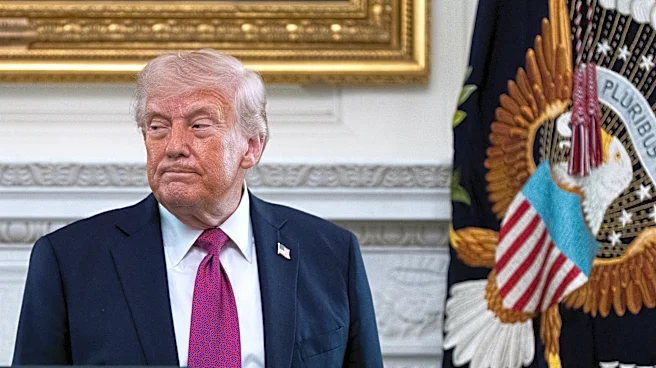
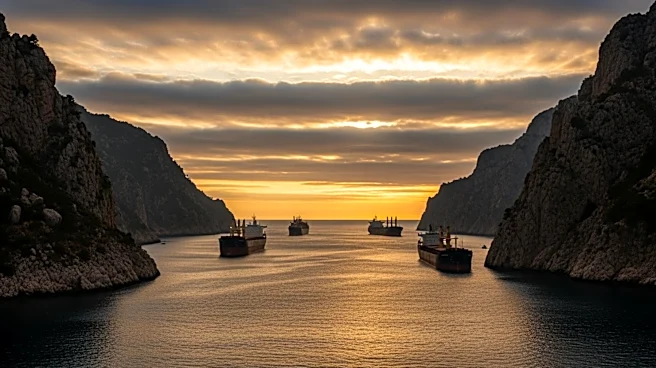
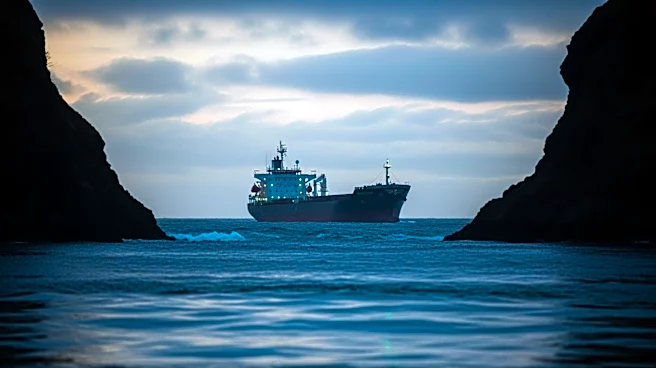
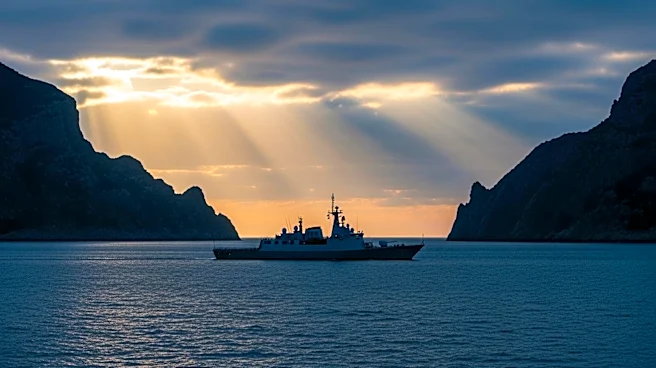
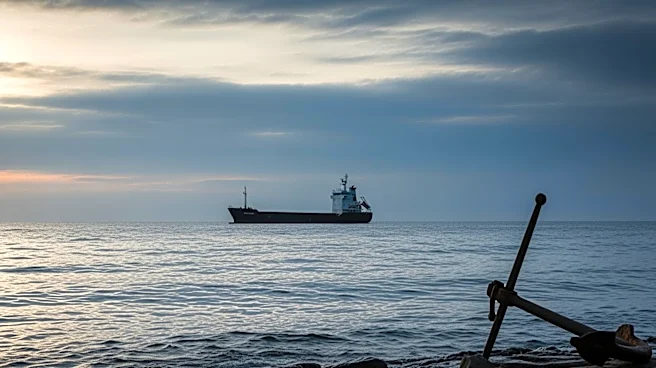
President Trump has declared that the United States has 'total control' over the Strait of Hormuz, following the seizure of two container ships by Iranian forces. This statement comes amid heightened tensions between the US and Iran, with both nations
imposing blockades on the strategic waterway. The Pentagon has warned that clearing mines from the strait could take up to six months, complicating efforts to ensure safe passage for global oil shipments. The situation remains tense as both countries navigate the geopolitical implications of their actions.
Why It's Important?
The Strait of Hormuz is a critical chokepoint for global oil transportation, and any disruption can have significant economic repercussions worldwide. President Trump's assertion of control is a strategic move to reassure allies and maintain stability in the region. However, the ongoing conflict and blockades pose risks to international trade and energy security. The situation also highlights the complex dynamics of US-Iran relations, with potential impacts on diplomatic efforts and regional stability.
What's Next?
The US and Iran are likely to continue their strategic maneuvers in the region, with potential diplomatic efforts to de-escalate tensions. The international community will be closely monitoring the situation, as prolonged disruptions could lead to increased oil prices and economic instability. The US may also seek to strengthen alliances with Gulf states to counterbalance Iran's influence and ensure the security of maritime routes.