




What's Happening?
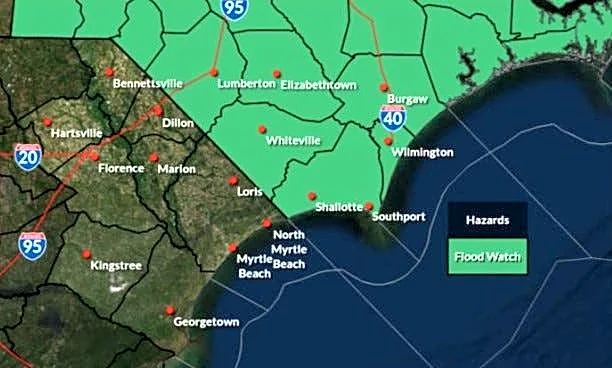
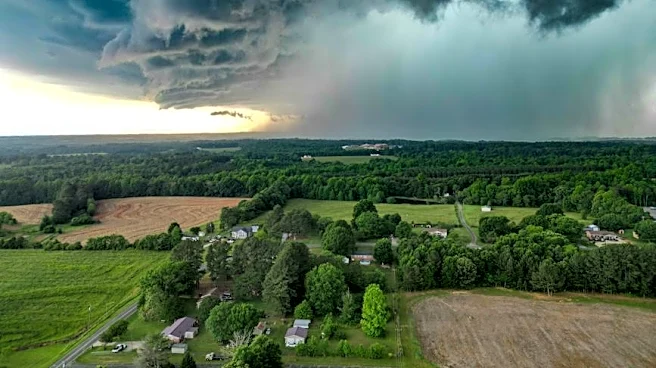
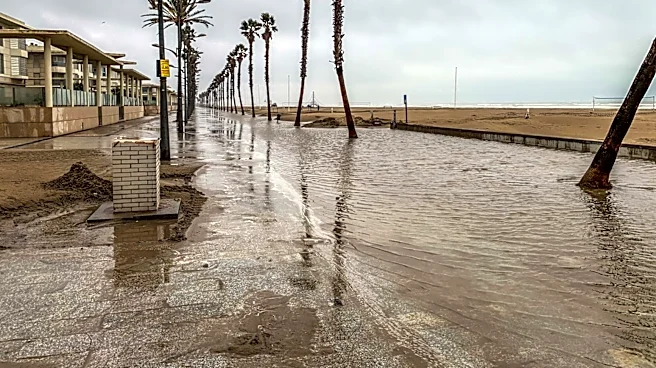
Heavy rainfall in North Carolina has resulted in significant flooding across the Piedmont Triad region, leading to multiple road closures and power outages. The torrential downpours have caused flash flooding, with several roads and highways being closed
due to washed-out conditions or downed power lines and trees. Notable closures include sections of Salem Parkway and I-40, impacting traffic flow and accessibility. Emergency services have urged residents to heed road closure signs and avoid attempting to drive through flooded areas. The flooding has also led to power outages in various counties, affecting thousands of residents.
Why It's Important?
The flooding in North Carolina highlights the vulnerability of infrastructure to extreme weather events, which are becoming increasingly common due to climate change. The road closures and power outages disrupt daily life, affecting commuting, business operations, and emergency services. Such events underscore the need for improved infrastructure resilience and emergency preparedness to mitigate the impact of severe weather. The economic implications are significant, as businesses may face losses due to reduced customer access and operational challenges. Additionally, the safety risks posed by flooded roads and downed power lines emphasize the importance of public awareness and adherence to safety advisories during such events.
What's Next?
As the region deals with the immediate aftermath of the flooding, efforts will focus on restoring power and reopening roads. Emergency services and utility companies are working to clear debris and repair damaged infrastructure. In the longer term, local governments may need to assess and enhance flood management strategies, including improving drainage systems and reinforcing vulnerable infrastructure. Community leaders and policymakers might also consider investing in climate adaptation measures to better prepare for future extreme weather events. Public communication will be crucial in keeping residents informed about recovery efforts and safety precautions.