




What's Happening?
Tarrant County Commissioner Matt Krause has stated that the debate surrounding data centers transcends partisan lines and suggests that the Texas Legislature should establish standardized criteria for these projects, while allowing cities to manage other
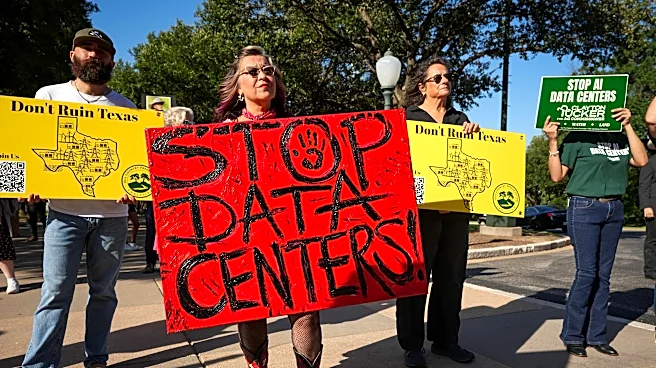
aspects. This comes after a town hall meeting where constituents voiced concerns about the rapid growth of data centers. Speakers at the town hall, including residents from The Lakes at Marshall Ridge Homeowners Association in Keller, acknowledged the necessity of data centers due to the rise of artificial intelligence but emphasized the need for regulations. Key areas of concern included water usage, power consumption, noise levels, and appropriate setbacks from residential areas. There were also questions raised about the necessity of financial incentives for attracting data centers and the trustworthiness of developers, operators, and public officials. Some attendees likened the data center boom to a speculative gold rush, drawing parallels to the eventual obsolescence of regional malls.
Why It's Important?
The discussion initiated by Commissioner Krause highlights a growing tension between economic development and environmental/community concerns in Texas. The rapid expansion of data centers, driven by the increasing demand for artificial intelligence, presents significant opportunities for economic growth and technological advancement. However, the concerns raised by residents regarding water and power consumption, noise pollution, and the potential for overtaxing the state's power grid underscore the substantial environmental and infrastructural challenges. The call for state-level 'guardrails' and standardized criteria suggests a recognition that local municipalities alone may not be equipped to manage the complex impacts of these large-scale projects. This debate is crucial for shaping future policy on technology infrastructure, potentially influencing how states balance industrial growth with sustainable resource management and community well-being. The outcome could set a precedent for other states facing similar development pressures.
What's Next?
Commissioner Krause indicated that Tarrant County might develop a legislative agenda for the 2027 session, potentially including proposals for data center regulations. He envisions a regulatory model that divides responsibility between the state and cities, with the state setting core criteria and cities handling local specifics. The Fort Worth City Council has already taken a step in this direction by requiring data center applications to comply with Governor Greg Abbott's statewide audit. Future legislative efforts could focus on mandating public disclosure for data center projects, establishing zoning regulations for substantial separation from neighborhoods, and encouraging projects that generate their own power and minimize water usage. Krause also suggested that the Texas Legislature might reconsider or eliminate tax incentives for data center projects, reflecting a shift in public and political sentiment regarding the benefits versus costs of these developments.
Beyond the Headlines
The debate over data centers in Texas touches upon deeper implications beyond immediate environmental and economic concerns. It reflects a broader societal challenge of integrating rapidly evolving technologies, like artificial intelligence, into existing communities and infrastructure without compromising quality of life or resource sustainability. The comparison of data centers to a 'speculative gold rush' suggests a skepticism about the long-term viability and true benefits of these investments, especially if they are heavily reliant on public subsidies. This situation also raises questions about democratic accountability and trust in public officials and developers, as residents express doubts about the transparency and fairness of current development processes. The push for self-sufficiency in energy and water for data centers could catalyze innovation in sustainable infrastructure, potentially leading to new models for industrial development that are less reliant on public resources and more integrated with renewable solutions.