



What's Happening?
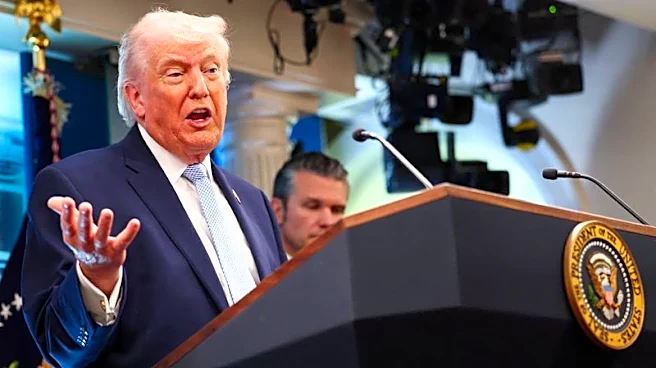
Leaders from the Navajo Nation have unanimously passed a resolution opposing the SAVE America Act, a voter-ID law pending in the U.S. Senate. The bill, a priority for President Trump, would require voters to present ID at the polls and prove citizenship
when registering. Tribal leaders argue that the law would disproportionately affect the Navajo Nation, where residents often travel long distances to election offices and many lack the necessary documentation. The bill has passed the Republican-controlled House, but its future in the Senate is uncertain. Supporters claim it will prevent non-citizens from voting, though experts note such instances are rare.
Why It's Important?
The opposition from the Navajo Nation highlights the potential disenfranchisement of tribal voters, who may face significant barriers in obtaining the required identification. This development underscores broader debates about voter ID laws and their impact on minority communities. The bill's passage could affect the 420,000 enrolled members of the Navajo Nation, many of whom lack birth certificates or other forms of ID. The controversy also reflects ongoing tensions between federal election policies and the rights of indigenous populations.
What's Next?
The Senate's decision on the SAVE America Act will be closely watched, as it could set a precedent for future voter ID laws. If passed, the law may face legal challenges from civil rights groups and tribal organizations. The outcome could influence voter turnout and election integrity debates ahead of the midterm elections. Stakeholders, including political leaders and advocacy groups, are likely to intensify their lobbying efforts as the Senate vote approaches.