








What's Happening?
Chinese President Xi Jinping has announced the formation of the World Artificial Intelligence Cooperation Organisation (WAICO), a new inter-governmental alliance aimed at promoting international cooperation and developing AI regulations. The alliance,
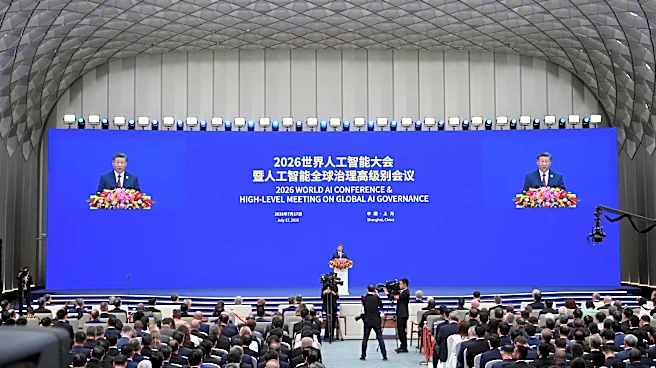
headquartered in Shanghai, includes 29 founding member countries, primarily from the Global South, such as Indonesia, Brazil, and South Africa. The announcement was made during a major tech conference in Shanghai, where China showcased its advancements in AI technology. President Xi emphasized the need for international collaboration in AI development, advocating for a 'people-centered' approach that ensures AI remains under human control. The formation of WAICO is seen as a strategic move by China to position itself as a leader in the global AI landscape, potentially influencing how AI policies are framed at the United Nations.
Why It's Important?
The establishment of WAICO signifies China's ambition to shape global AI regulations and challenge the United States' influence in the field. As AI becomes a critical component of industrial policy, China's investment in building a self-sustained AI ecosystem has intensified competition with the U.S., particularly in areas like chip production and AI-powered systems. The alliance could enable China to advocate for AI policies that align with its interests, especially as countries grapple with the rapid growth of AI and its implications for military and security applications. By leading this initiative, China aims to gain support from middle-power and low-income countries, potentially shifting the balance of power in global technology governance.
What's Next?
The formation of WAICO is likely to prompt reactions from major stakeholders, including the United States, which may seek to counterbalance China's influence in AI governance. As the alliance begins to shape AI policies, there could be increased diplomatic engagement and negotiations at international forums like the United Nations. The U.S. may also intensify its efforts to strengthen its own AI capabilities and forge alliances with other countries to maintain its leadership in technology. Additionally, the development of AI regulations will continue to be a contentious issue, with debates over ethical considerations and national security implications likely to intensify.
Beyond the Headlines
The creation of WAICO highlights the geopolitical dimensions of AI development, as countries vie for technological supremacy. China's leadership in this alliance reflects its broader strategy to assert its influence in global governance, particularly in areas where it perceives the U.S. as retreating. The alliance also underscores the importance of international cooperation in addressing the challenges posed by AI, such as ensuring equitable access to technology and preventing its misuse. As AI continues to evolve, the need for comprehensive and inclusive regulatory frameworks will become increasingly critical, with WAICO potentially playing a pivotal role in shaping these discussions.