






What's Happening?
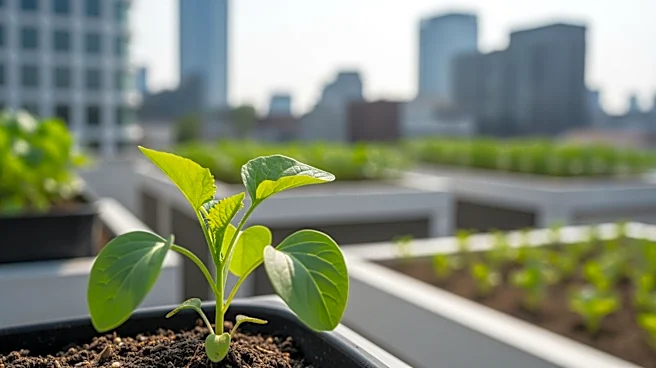
Researchers at Utah State University are pioneering efforts to enhance urban agriculture through the development of dwarf vegetable crops. Graduate student Abigail Lazier is leading research focused on how these compact plant varieties can address urban agriculture challenges
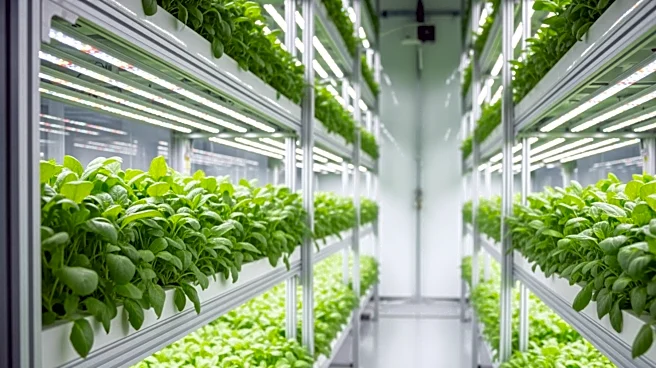
such as limited space and lighting. The study evaluated 10 dwarf tomato cultivars under varying light conditions, revealing that certain compact varieties, like 'Twiggy' and 'Red Velvet', are highly efficient in terms of yield per unit area. The research highlights the potential of dwarf crops to improve food production in urban settings, offering a solution to reduce transportation costs, minimize food waste, and enhance food security. The findings suggest that with adequate lighting, these crops can produce significant yields, making them suitable for container gardening, vertical farms, and indoor systems.
Why It's Important?
The development of dwarf vegetable crops is significant as it addresses the growing need for sustainable urban agriculture solutions. As urban populations increase, the demand for local food production becomes critical to ensure food security and reduce environmental impacts associated with long-distance food transportation. By enabling efficient use of space and resources, these crops can empower individuals, schools, and communities to grow fresh produce year-round, potentially transforming urban landscapes into productive agricultural spaces. This innovation not only supports local economies but also contributes to environmental sustainability by reducing the carbon footprint of food production.
What's Next?
The research team at Utah State University plans to expand their studies to include other dwarf crops such as peppers and peas. The goal is to develop low-maintenance systems that are accessible to a wide range of growers, from small-scale urban farmers to educational institutions. Future research will likely focus on optimizing light conditions and exploring additional plant varieties to further enhance the productivity and viability of urban agriculture. As these systems become more refined, they could play a crucial role in shaping the future of food production in densely populated areas.