
What's Happening?
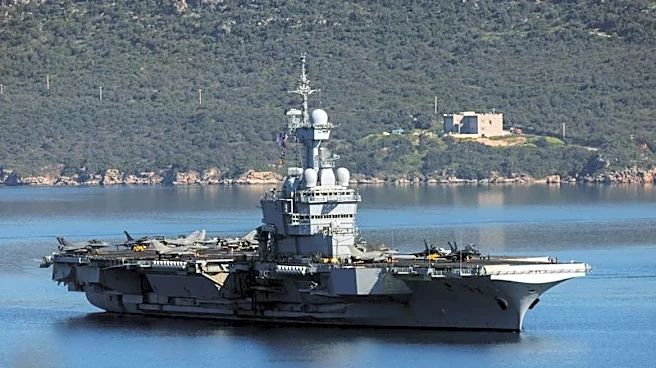
President Trump has stated that the ceasefire with Iran remains in effect despite recent military exchanges in the Strait of Hormuz. The U.S. and Iran have accused each other of initiating the conflict,
with Iran reportedly using missiles and drones against U.S. warships. The U.S. responded with strikes on Iranian military targets. This exchange of fire comes amidst ongoing peace talks, with Trump describing the U.S. response as a 'love tap' aimed at de-escalating tensions. The situation remains delicate as both nations navigate the ceasefire agreement and potential diplomatic resolutions.
Why It's Important?
The Strait of Hormuz is a critical chokepoint for global oil and gas shipments, and any conflict in this region can have significant economic repercussions. The U.S.-Iran tensions highlight the fragile nature of the ceasefire and the challenges in achieving lasting peace. President Trump's approach to maintaining the ceasefire while responding to Iranian actions reflects the complexity of U.S. foreign policy in the Middle East. The outcome of these interactions could influence global energy markets and international diplomatic relations.
What's Next?
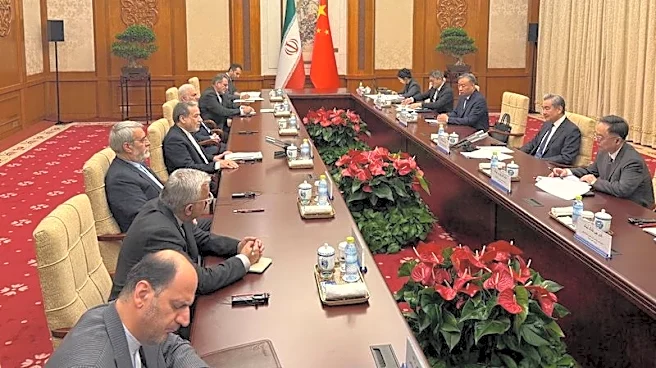
The U.S. and Iran are expected to continue diplomatic negotiations to solidify the ceasefire and address underlying tensions. The international community will be closely monitoring these developments, as any escalation could disrupt global oil supplies and impact international relations. The U.S. administration's strategy will likely focus on balancing military readiness with diplomatic efforts to achieve a sustainable resolution.