


What's Happening?
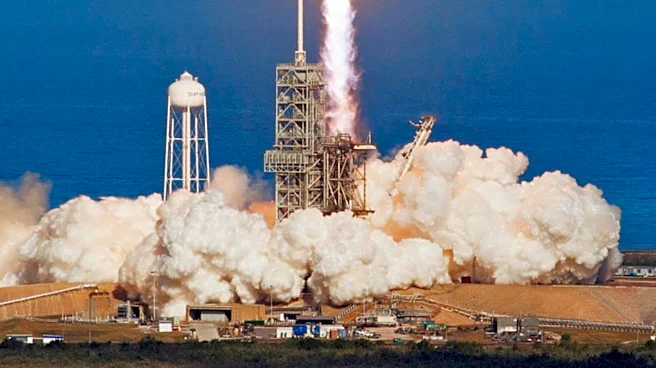
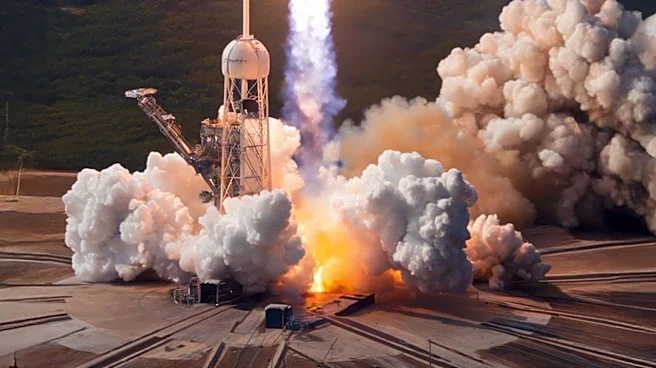
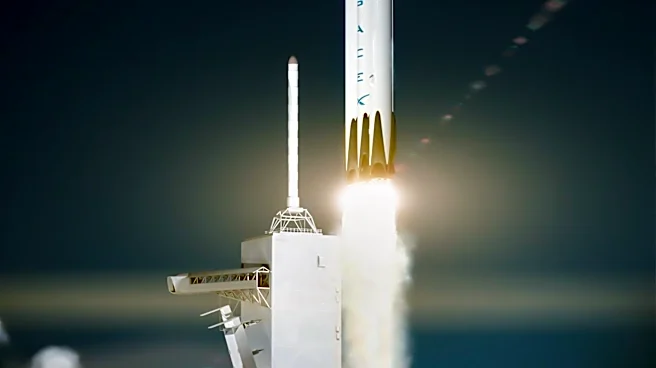
A SpaceX Falcon 9 rocket stage crashed into the Moon on August 5, 2026, creating a plume of dust and debris. The impact was observed by the European Southern Observatory's Very Large Telescope, which detected spectral lines of sodium and lithium gas in the plume.
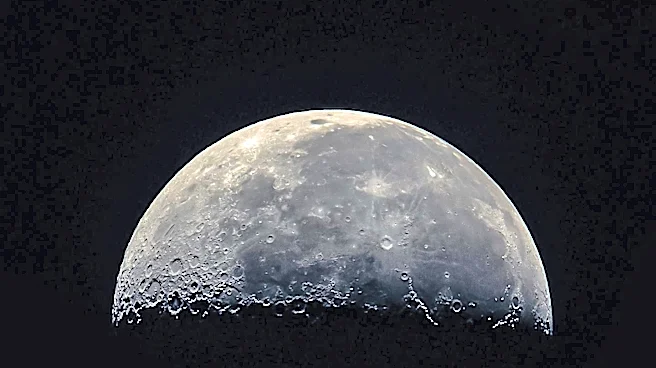
The crash occurred near the Moon's terminator line and was not visible to the naked eye. The event provides an opportunity for scientists to study the effects of space debris impacts on the Moon.
Why It's Important?
The incident highlights the growing issue of space debris and its potential impact on celestial bodies. As space exploration efforts increase, the management of space junk becomes crucial to prevent unintended collisions. The crash serves as a reminder of the need for responsible disposal of space hardware. It also provides an opportunity for scientists to study the effects of such impacts on the Moon's surface, which can inform future missions and debris management strategies.
What's Next?
NASA's Lunar Reconnaissance Orbiter and South Korea's Pathfinder Lunar Orbiter are expected to capture images of the impact site to provide visual confirmation and further study the effects of the crash. These observations will help refine models for tracking space debris and inform future space exploration policies. The incident may lead to discussions among space agencies and companies about improving protocols for the disposal of space hardware to prevent similar occurrences.