






What's Happening?
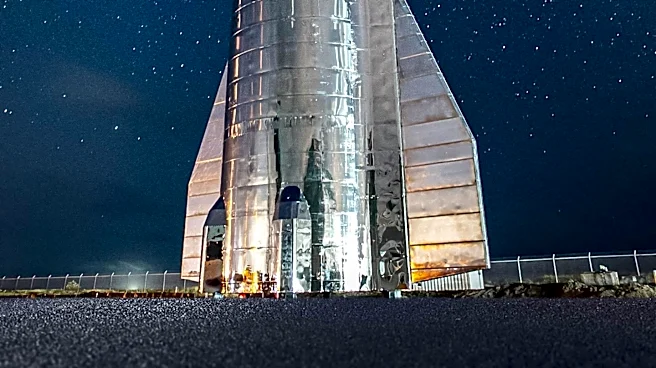
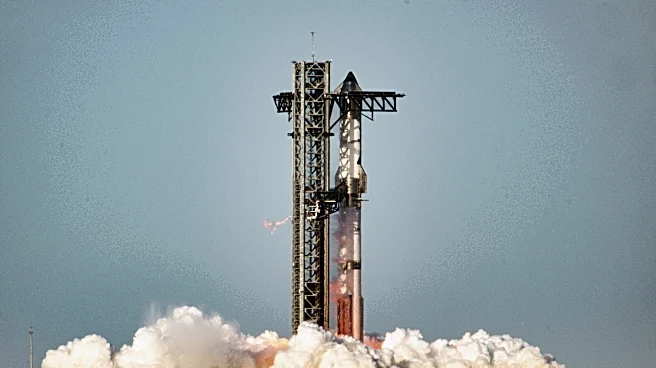
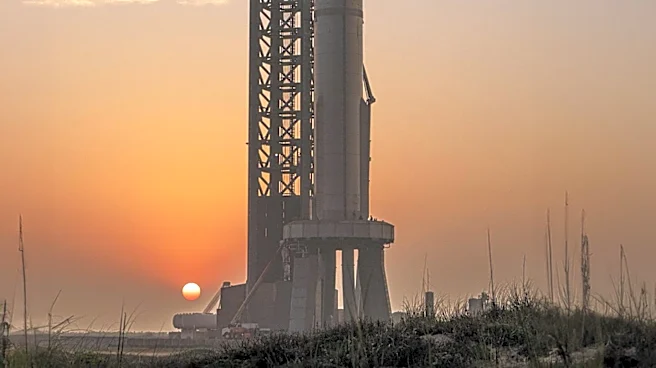
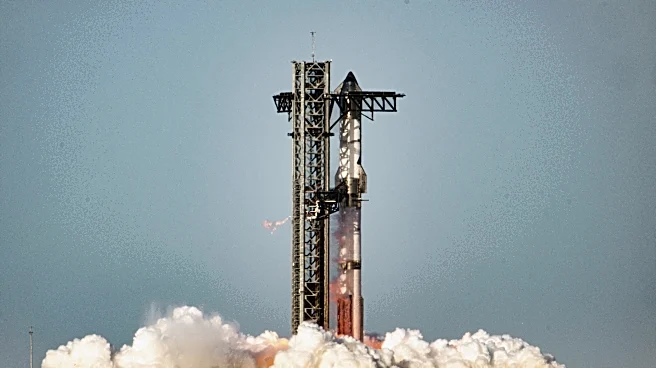
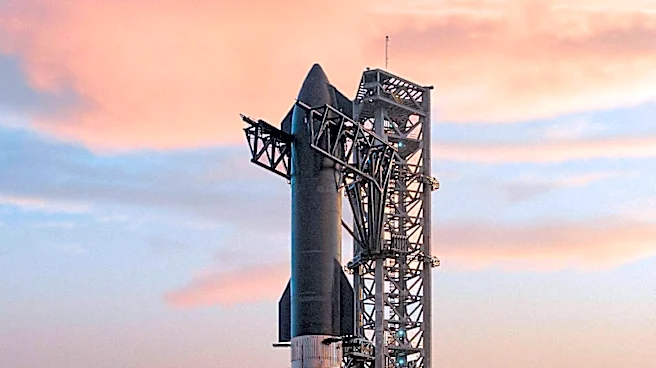
SpaceX is targeting November 2026 for Starship Flight 15, the 15th integrated flight test of its Starship rocket. This mission aims to achieve a significant milestone: catching the upper stage of the Starship at its launch tower upon return from space,
in addition to recovering the Super Heavy booster. While no official launch date has been confirmed, a full-duration static-fire test of Super Heavy Booster 22 was successfully completed on October 25, igniting all 33 Raptor engines for approximately 15 seconds. Although the specific payload for Flight 15 is unconfirmed, industry speculation suggests another Starlink satellite deployment. This flight is crucial for advancing SpaceX's goal of full and rapid reusability for both Starship stages, which is central to reducing launch costs and accelerating the deployment of next-generation satellites for direct-to-cell connectivity.
Why It's Important?
The success of Starship Flight 15, particularly the upper stage catch, is vital for the future of satellite-to-mobile connectivity and the broader telecommunications industry. Lower launch costs per kilogram, enabled by full reusability, directly impact the speed at which SpaceX can deploy its FCC-approved 15,000-satellite direct-to-device constellation. This capability is becoming a competitive factor for carriers and a regulatory priority for the FCC. A successful tower-catch would demonstrate the feasibility of the high launch cadence needed to build out and maintain such a large constellation, which is essential for making direct-to-cell services commercially viable at scale. The progress made with Starship's reusability milestones directly influences how quickly next-generation Starlink V3 satellites, offering significantly more direct-to-cell capacity, can reach orbit.
What's Next?
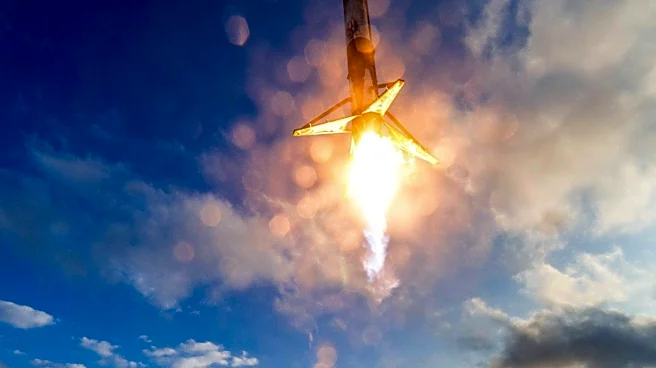
Following the targeted November 2026 launch, the aerospace and telecommunications industries will closely monitor the outcome of Starship Flight 15, especially the upper stage catch attempt. A successful recovery will validate SpaceX's reusability strategy and provide critical data for future Starship missions. The insights gained from this flight will contribute to the ongoing development of the Block 2 design, which features increased propellant capacity and improved aerodynamics. Concurrently, SpaceX will continue its Falcon 9 missions, with two scheduled for early November, including a Starlink deployment, as the Falcon 9 fleet remains the workhorse for near-term satellite deployments while Starship matures. The long-term goal is for Starship's reusability to enable a scale of operations that could eventually replace the Falcon 9 for large-scale constellation buildouts.
Beyond the Headlines
The pursuit of full reusability for Starship, exemplified by the Flight 15 upper stage catch attempt, represents a paradigm shift in space launch economics. By drastically reducing the marginal cost per launch, SpaceX aims to unlock unprecedented opportunities for satellite deployment and space-based services. This technological advancement has broader implications beyond just telecommunications, potentially enabling more affordable and frequent access to space for various applications, including scientific research, resource exploration, and even future space tourism. The integration of launch cadence as a critical variable in telecom infrastructure planning highlights the convergence of space technology with terrestrial industries, blurring traditional boundaries and creating new interdependencies. This development could also inspire other aerospace companies and nations to accelerate their own reusable rocket programs, fostering a new era of competition and innovation in space access.