


What's Happening?
The Global Carbon Council (GCC), World Bank, and Common Market for Eastern and Southern Africa (COMESA) have jointly introduced a new digital carbon crediting framework. This initiative aims to support energy access projects across Eastern and Southern Africa.
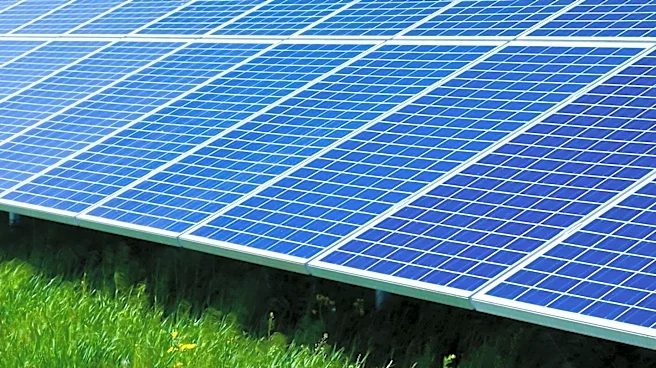
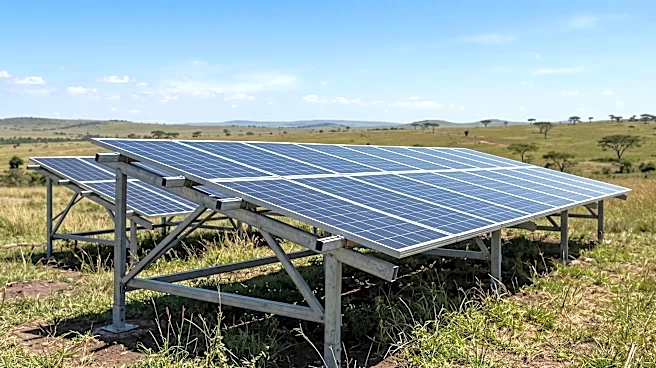
The framework, developed and operated by GCC following its selection by the World Bank, is known as the Energy Access Program Standard. It specifically covers off-grid solar, mini-grids, grid extensions, and clean cooking projects. This framework is designed to bolster the World Bank’s ASCENT program, which has an ambitious goal of providing electricity to 100 million people and clean cooking solutions to 20 million people across more than 20 countries. Dr. Yousef Alhorr, founding chairman of the Global Carbon Council, emphasized that the goal is to ensure access to carbon finance is not hindered by lengthy processes, thereby accelerating the delivery of results.
Why It's Important?
This new digital carbon crediting framework is important for several reasons, particularly in the context of global climate goals and economic development. For the U.S., it represents a significant international effort to address energy poverty and climate change in a critical region. The framework's focus on off-grid solar, mini-grids, and clean cooking solutions aligns with broader global trends towards decentralized renewable energy, which could open new markets for U.S. clean energy technology providers and investors. By streamlining access to carbon finance, the initiative aims to accelerate the deployment of sustainable energy infrastructure, potentially reducing reliance on fossil fuels and mitigating greenhouse gas emissions. This could also contribute to regional stability and economic growth in Eastern and Southern Africa, which indirectly benefits U.S. foreign policy and trade interests. The success of such programs can also serve as a model for other developing regions, influencing future international climate finance strategies and partnerships that the U.S. may engage in.
What's Next?
The immediate next step for this initiative is the implementation of the Energy Access Program Standard to support projects under the World Bank's ASCENT program. This will involve identifying and financing specific off-grid solar, mini-grid, grid extension, and clean cooking projects across more than 20 countries in Eastern and Southern Africa. The effectiveness of the digital carbon crediting framework will be continuously monitored, with a focus on how quickly and efficiently it can channel carbon finance to these projects. Success in this region could lead to the expansion of similar frameworks to other parts of Africa and other developing regions globally. Stakeholders, including the World Bank, GCC, and COMESA, will likely assess the impact on energy access rates, emission reductions, and the economic viability of supported projects. The initiative's progress will also be watched by international climate finance bodies and private investors, potentially influencing future funding decisions and partnerships in the clean energy sector.
Beyond the Headlines
This initiative goes beyond simply providing energy; it addresses the complex interplay between climate change, economic development, and social equity. By focusing on energy access in underserved communities, the framework tackles a critical barrier to human development, enabling better education, healthcare, and economic opportunities. The digital nature of the carbon crediting framework suggests an innovative approach to transparency and efficiency in climate finance, potentially setting a new standard for how carbon markets operate in developing contexts. However, the success of such a framework also depends on robust governance, local capacity building, and ensuring that the benefits truly reach the most vulnerable populations. There's a deeper implication regarding the shift in global energy paradigms: moving away from large, centralized fossil fuel-based grids towards decentralized, renewable solutions. This shift challenges traditional energy infrastructure models and could empower local communities with greater control over their energy resources. The initiative also highlights the growing recognition that climate action and development goals are inextricably linked, requiring integrated solutions that address both environmental sustainability and human well-being.