



What's Happening?
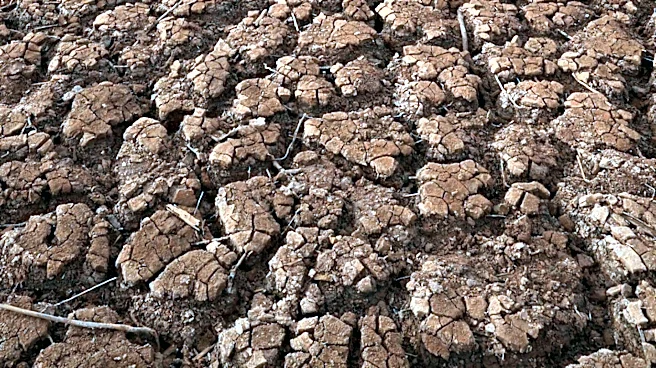
Colorado Springs endured one of its hottest and driest Augusts on record, according to the National Weather Service in Pueblo. The average temperature for the month reached 73.8 degrees, nearly four degrees warmer than normal, making it the fourth-warmest
August since data collection began. This figure is just slightly below the record of 74.1 degrees set in 2011. Seven daily heat records were either broken or tied during the month. Despite some monsoonal moisture in the latter half of August, the city received only 1.09 inches of precipitation, significantly less than the typical 3 inches for the month, ranking it as the 20th driest August. Since January 1, Colorado Springs has accumulated 7.22 inches of rain, approximately 6 inches below the usual amount, contributing to a widespread extreme drought across a large portion of the state, including most of El Paso County.
Why It's Important?
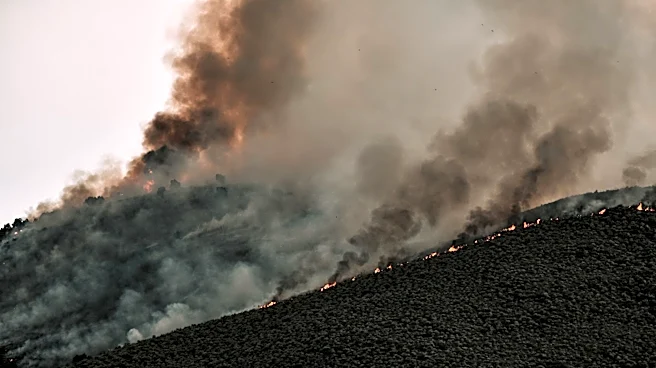
The prolonged drought and near-record heat in Colorado Springs and across Colorado carry significant implications for the region's environment and economy. The unusually warm and dry conditions during the past winter and spring created an environment conducive to rapid wildfire spread, as evidenced by the Aspen Acres fire, which grew to over 102,000 acres and became the seventh-largest wildland blaze in Colorado history. This fire, and subsequent flash floods, are directly linked to the drought. The historic drop in mountain snowpack, a crucial natural reservoir, has led to decreased water levels in river basins and reservoirs, raising concerns about water security. Colorado State Climatologist Russ Schumacher noted that while reservoirs can typically manage one bad year, multiple consecutive dry years could lead to serious water shortages, impacting agriculture, urban water supply, and recreational activities dependent on water resources.
What's Next?
Looking ahead, September is projected to be slightly warmer than average but is expected to bring more moisture to Colorado Springs. Weather experts are cautiously optimistic that an ongoing El Niño event, predicted to be one of the largest in decades, will deliver much-needed moisture to the state, potentially starting in October. While El Niño often brings extreme weather globally, it tends to be beneficial for Colorado in terms of drought relief, according to Schumacher. However, the relationship between El Niño and Colorado's weather patterns is not as strong as in other regions, making precise predictions challenging. The hope is that 2027 will see increased moisture, as it would be unusual to experience two consecutive years of such severe drought conditions.
Beyond the Headlines
The persistent drought and extreme weather patterns in Colorado Springs highlight broader challenges related to climate variability and water management in the Western United States. The interconnectedness of drought, wildfires, and subsequent flooding underscores the complex environmental feedback loops at play. The reliance on mountain snowpack as a 'natural reservoir' emphasizes the vulnerability of the region's water supply to changing winter conditions. This situation prompts deeper discussions about long-term water conservation strategies, infrastructure resilience, and the need for adaptive management practices in the face of unpredictable climate shifts. The potential for an El Niño event to alleviate drought conditions offers a short-term reprieve but also serves as a reminder of the reliance on natural climate phenomena, rather than sustainable long-term solutions, to address critical resource issues.